

Evaporator
Shell & Tube Heat Exchangers
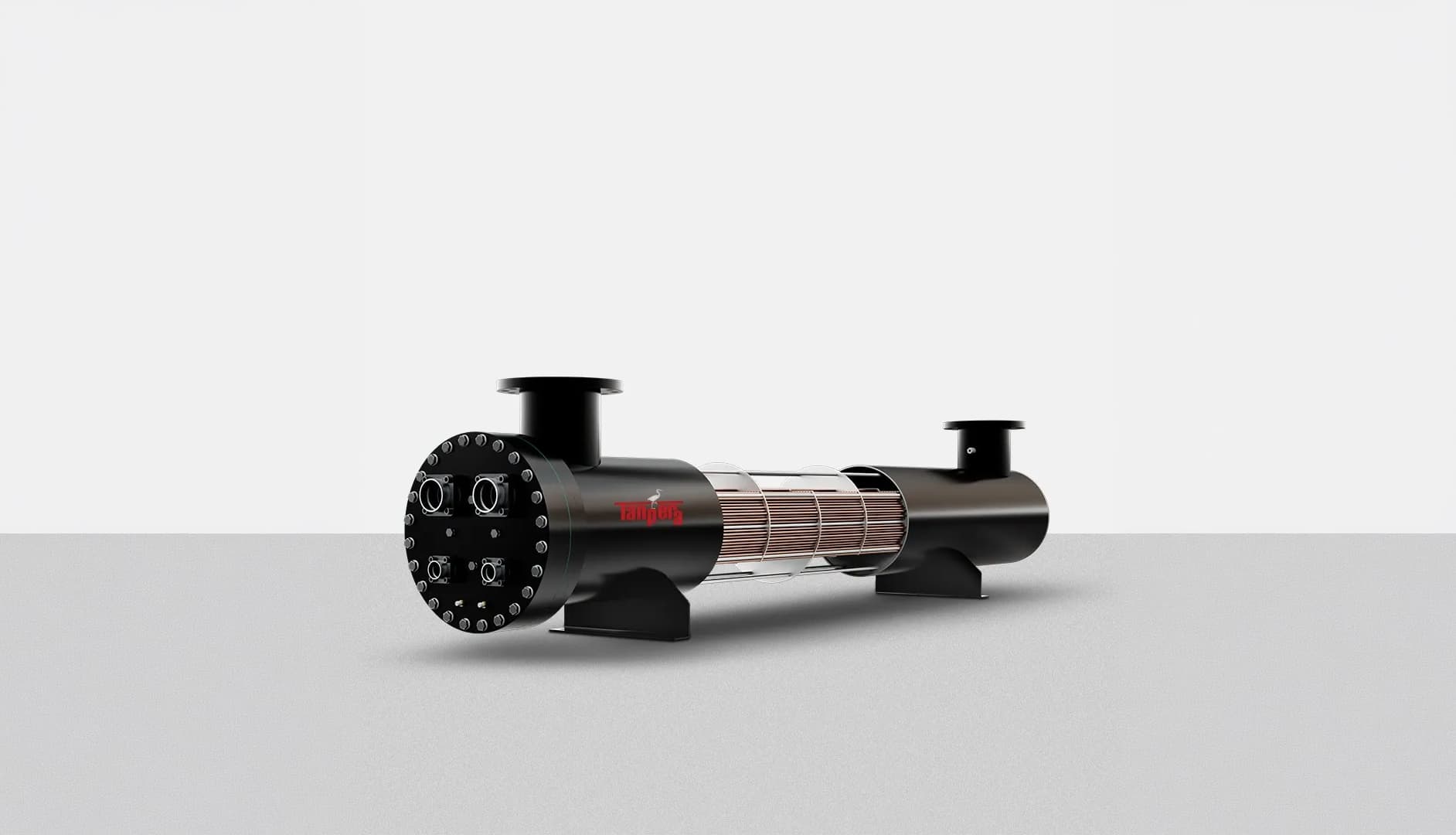
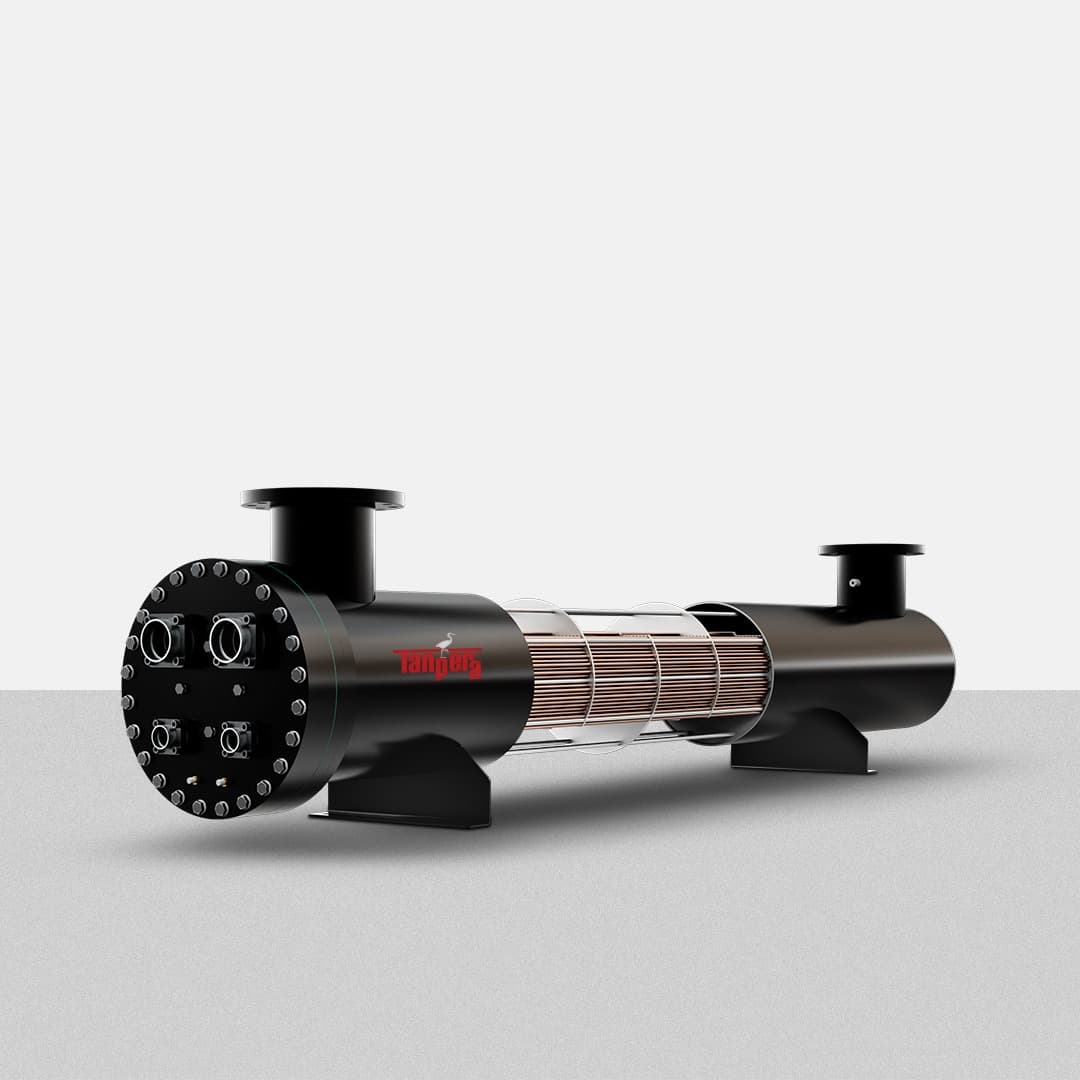
An evaporator is a heat exchanger in which refrigerant evaporates at low pressure and absorbs heat from the surroundings.
What is an evaporator?
An evaporator is a heat exchanger in which refrigerant evaporates at low pressure and absorbs heat from the surroundings.
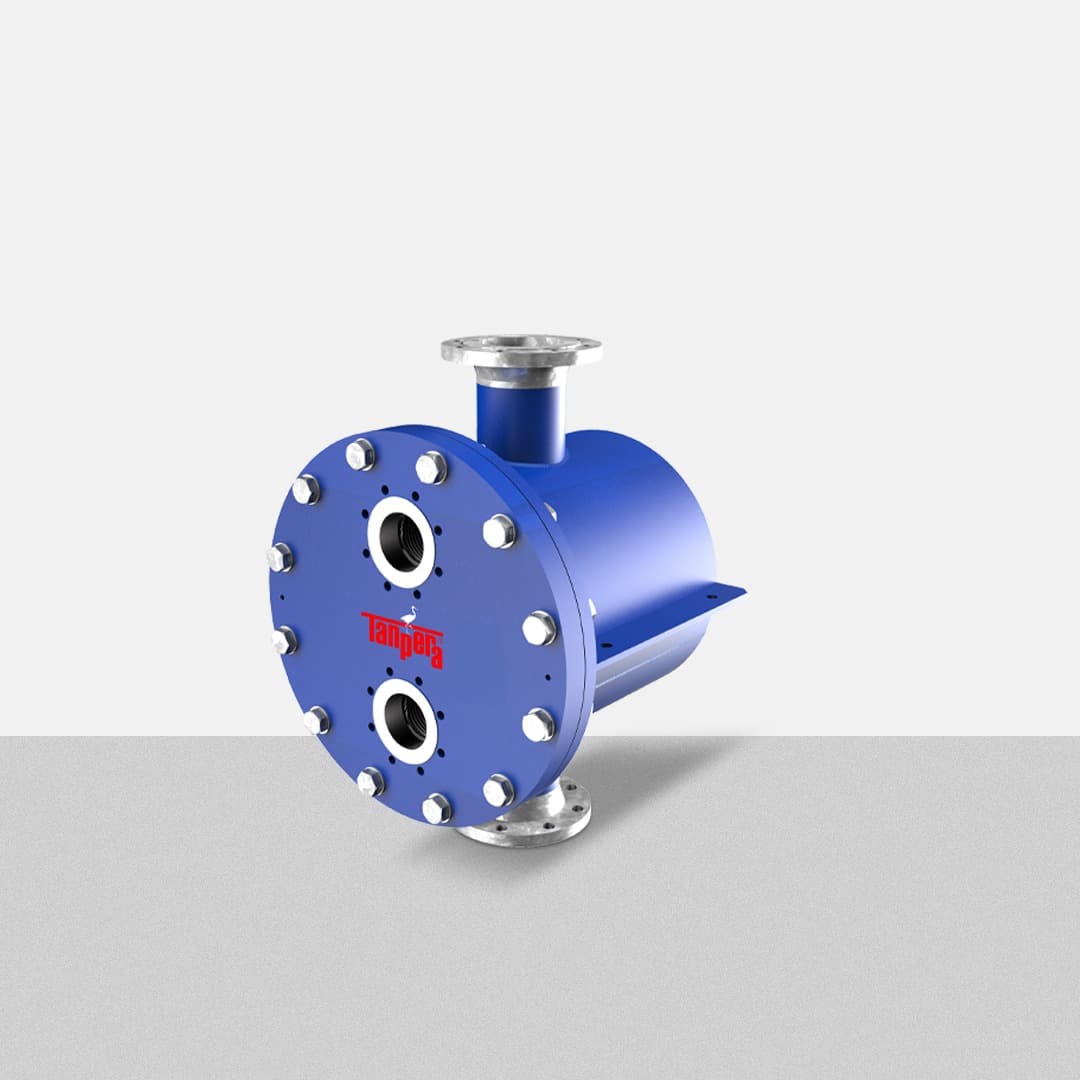
Tanpera TES Series evaporators are dry-expansion shell-and-tube solutions designed for high performance, energy savings, and long service life in industrial and HVAC chiller packages. For process shell-and-tube (TGB) see the shell-and-tube heat exchanger .
Role in the Refrigeration Cycle
The refrigeration cycle consists of four main components: compressor, condenser, expansion valve, and evaporator. The compressor raises the gas pressure and temperature and sends it to the condenser; the fluid condensed in the condenser reaches the expansion valve. The gas–liquid mixture leaving the valve enters the evaporator; here the refrigerant fully returns to the gas phase, flows back to the compressor, and the cycle is completed.
The success of a cooling system depends directly on efficient evaporator operation; when correctly selected, system performance and energy efficiency increase significantly.
TES Series Advantages
High heat-transfer efficiency
Precise temperature control
The refrigerant’s transition to vapor phase maintains the desired temperature level, enabling stable operation in food, process, and HVAC applications.
Durability and long service life
Manufactured with materials and engineering suited to demanding industrial conditions; EN-compliant mechanical calculations are performed by Tanpera engineers.
Easy installation, maintenance, and flexibility
A compact design simplifies installation and maintenance. With 1–4 independent gas circuits and different capacity and material options, project-based configuration is available.
Environmentally friendly with wide application range
Key Features
- Dry-expansion TES series shell-and-tube evaporator.
- Standard internally grooved copper tube; copper-nickel / AISI 304L / AISI 316L / carbon steel for special applications.
- Standard R407C; design compatible with HCFC, HFC, and HFO refrigerants.
- 1–4 independent gas circuits; wide operating range for chiller packages.
- Refrigerant-side 33 bar / water-side 11 bar dry-nitrogen test pressure.
- Model notation: TES – circuits – shell diameter – nominal capacity (+ baffle / length options).
Installation and Commissioning
During commissioning, air must be fully removed from the piping and evaporator; operation at a pressure drop matching design conditions must be verified.
Do not exceed the recommended maximum water flow rate; filters that prevent particles from entering the water circuit must be checked regularly. If fouling causes pressure/capacity loss, cleaning by reverse circulation can be performed.
After-Sales Services
The Tanpera service network provides spare parts, gasket sets, filters, and maintenance throughout the project life.
Our technical team works with project teams for on-site commissioning, operator training, and fault response.
- Periodic maintenance, filter and water-quality checks
- Spare parts and gasket supply
- Commissioning, training, and on-site technical support
- Performance checks and operating recommendations
Frequently Asked Questions
It is a heat exchanger that acts as a vaporizer in heating or cooling systems. In the refrigeration cycle it follows the compressor, condenser, and expansion valve; the refrigerant fully returns to the gas phase in the evaporator, is sent to the compressor, and the cycle is completed.
TANPERA TES Series units are dry-expansion shell-and-tube evaporators. They are manufactured with standard internally grooved copper tubes and a carbon-steel shell; for special applications they offer copper-nickel or AISI 304L/316L options, 1–4 independent gas circuits, and a wide chiller-compatible capacity range.
It is designed for R407C as standard. Tanpera engineers size it to operate with HCFC, HFC, and HFO refrigerants.
On standard TES evaporators, the refrigerant side is tested at 33 bar and the water side at 11 bar with dry nitrogen. Additional leak tests are applied on 1–4 circuit groups to prevent inter-circuit leaks.
They are used in the food industry, iron and steel casting, air-conditioning and heat-pump systems, cold storage, and industrial/HVAC chiller packages.
Water flow and inlet/outlet temperature, refrigerant, evaporation/condensation, superheat, and fouling factor are the key inputs. Reference tables in the brochure are based on R407C / 12–7 °C water / 45 °C condensation conditions; Tanpera’s engineering team determines the correct TES model for each project.
Water flow must not be stopped before the refrigerant is evacuated. During unused periods, water must be drained or the unit filled with antifreeze with no trapped air. The antifreeze ratio is selected for the desired freezing point.
Water-side filters must be checked regularly; water quality and antifreeze ratio should be monitored periodically. If fouling causes pressure or capacity loss, cleaning by reverse circulation can be performed. The product must be operated in a horizontal mounting position and below the recommended maximum flow rate.
You can download or view the English brochure and user manual as PDF from the Documents tab on the product page.
You can submit your project details via the Quote Form on the product page or contact our sales team at sales@tanpera.com. Our engineering team will contact you for capacity and material selection.