





Heat Transfer in Sugar and Ethanol Production
Heat Transfer in Sugar and Ethanol Production — Tanpera engineering guidance covering process requirements, design criteria and recommended equipment.
Key takeaways
- Heat Transfer in Sugar and Ethanol Production — Tanpera engineering guidance covering process requirements, design criteria and recommended equipment.
- Plate heat exchangers are used on juice heating circuits after diffusion and slicing
- In multi-effect evaporation lines, evaporators are the main heat-transfer units
- Compact heat exchangers are preferred on cooling/heating circuits before crystallization and white-sugar drying
- Ethanol (biofuel) side plants cover process heating and condensate recovery applications
Heat-Transfer Needs in Sugar Processes
In beet and cane sugar factories, heat exchangers and evaporators are critical equipment that directly affect energy consumption. Different temperature profiles, viscosities and fouling levels are assessed along the process line.
- Plate heat exchangers are used on juice heating circuits after diffusion and slicing
- In multi-effect evaporation lines, evaporators are the main heat-transfer units
- Compact heat exchangers are preferred on cooling/heating circuits before crystallization and white-sugar drying
- Ethanol (biofuel) side plants cover process heating and condensate recovery applications
- Corrosion-resistant material selection is critical on lime–carbonate regeneration and condensate lines
Process Points and Equipment Matching
Recommended heat-transfer equipment for typical sugar-factory process steps:
| Process step | Heat-transfer duty | Recommended equipment |
|---|---|---|
| Diffusion / slicing | Juice heating, process-water heat recovery | Gasketed plate heat exchanger |
| Carbonatation / liming | Condensate and process-water heating | Gasketed plate heat exchanger |
| Evaporation (multi-effect) | Juice concentration, vapour generation | Evaporator |
| Crystallization | Massecuite cooling / heating control | Gasketed plate heat exchanger |
| Ethanol plant | Distillation preheating, condensate recovery | Gasketed plate heat exchanger / evaporator |
For material selection on juice and condensate lines, AISI 316 stainless steel is typical; in aggressive environments titanium or specialty-alloy plates are assessed. Gasket material is determined as EPDM, NBR or Viton according to process temperature.
Design Parameters
Minimum engineering inputs for sizing:
- Hot/cold-side flow rates and inlet/outlet temperatures (°C)
- Fluid type: juice, condensate, steam, process water
- Design pressure (PN class) and maximum operating temperature
- Fouling profile: scale, organic residue, particulate content
- Cleaning method: CIP or periodic mechanical plate cleaning
- Installation orientation, flange class and existing line pressure
Tanpera Approach
End-to-end support with sugar-industry reference experience:
- Project-based thermal and hydraulic sizing
- Material recommendations specific to beet and cane processes
- Site installation, commissioning and performance testing
- After-sales spare plates, gaskets and service network
Recommended Tanpera Products
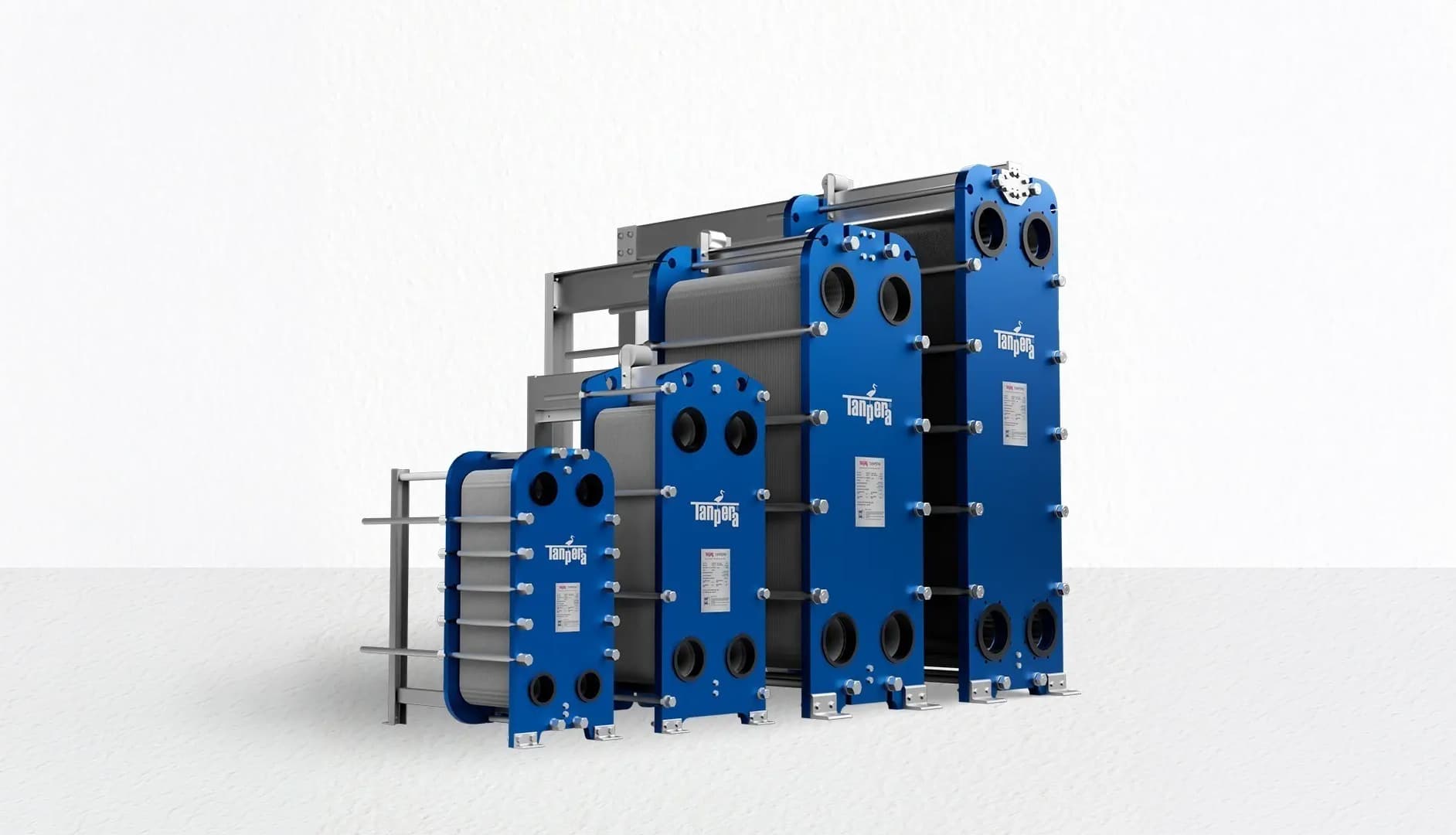
Gasketed Plate Heat Exchanger
Modular capacity and easy maintenance on diffusion, condensate and crystallization circuits. High efficiency for juice and process-water applications.
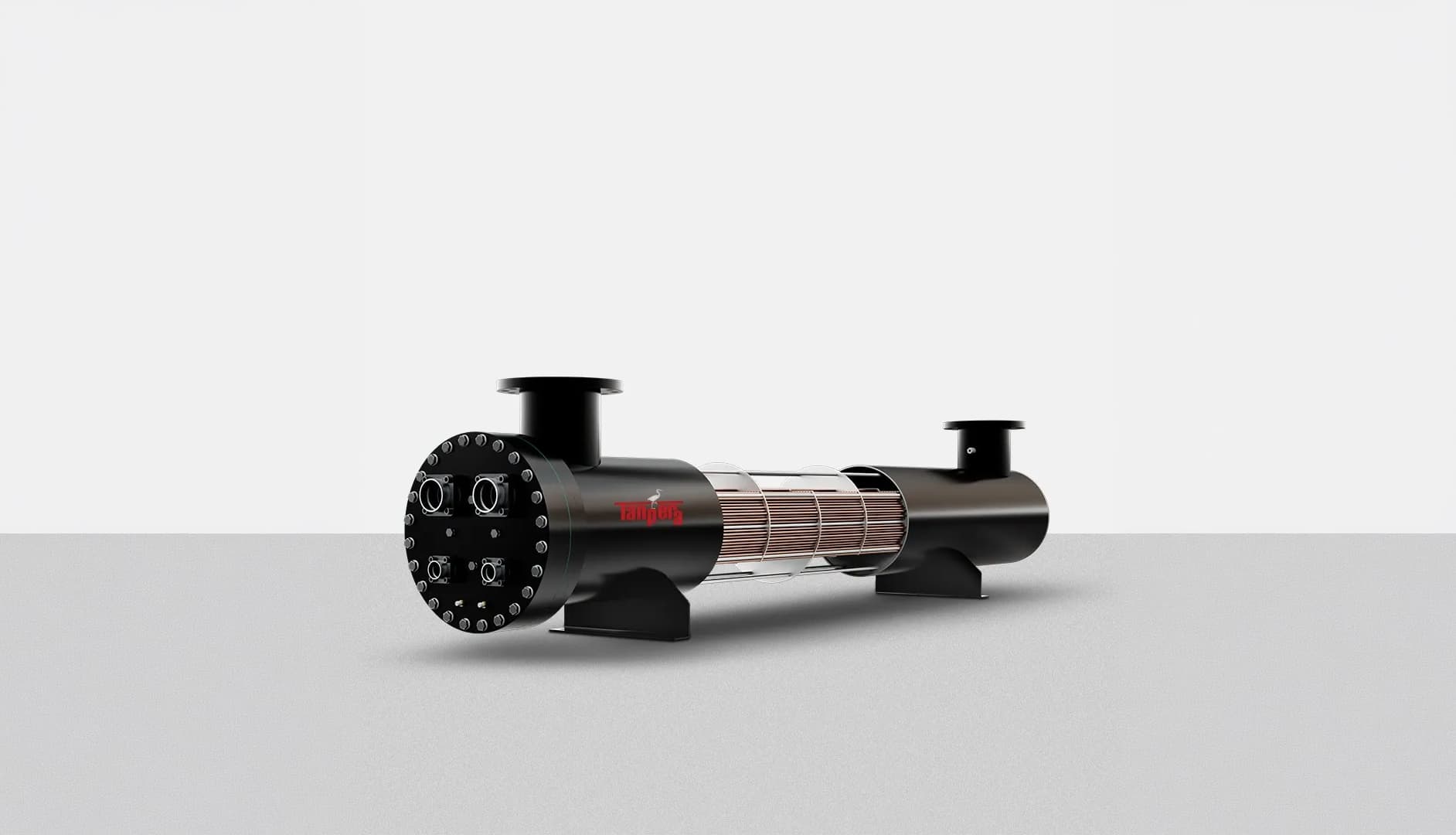
Evaporator
High heat-transfer capacity in multi-effect evaporation trains. Sugar concentration and energy-recovery circuits.
Equipment Selection Notes
- Gasketed plate heat exchanger — juice heating, condensate and general process interface
- Evaporator — evaporation and concentration circuits
- Periodic plate cleaning should be planned on dirty juice lines
- Modular plate-pack advantage is assessed for capacity growth
Related Solution Center Articles
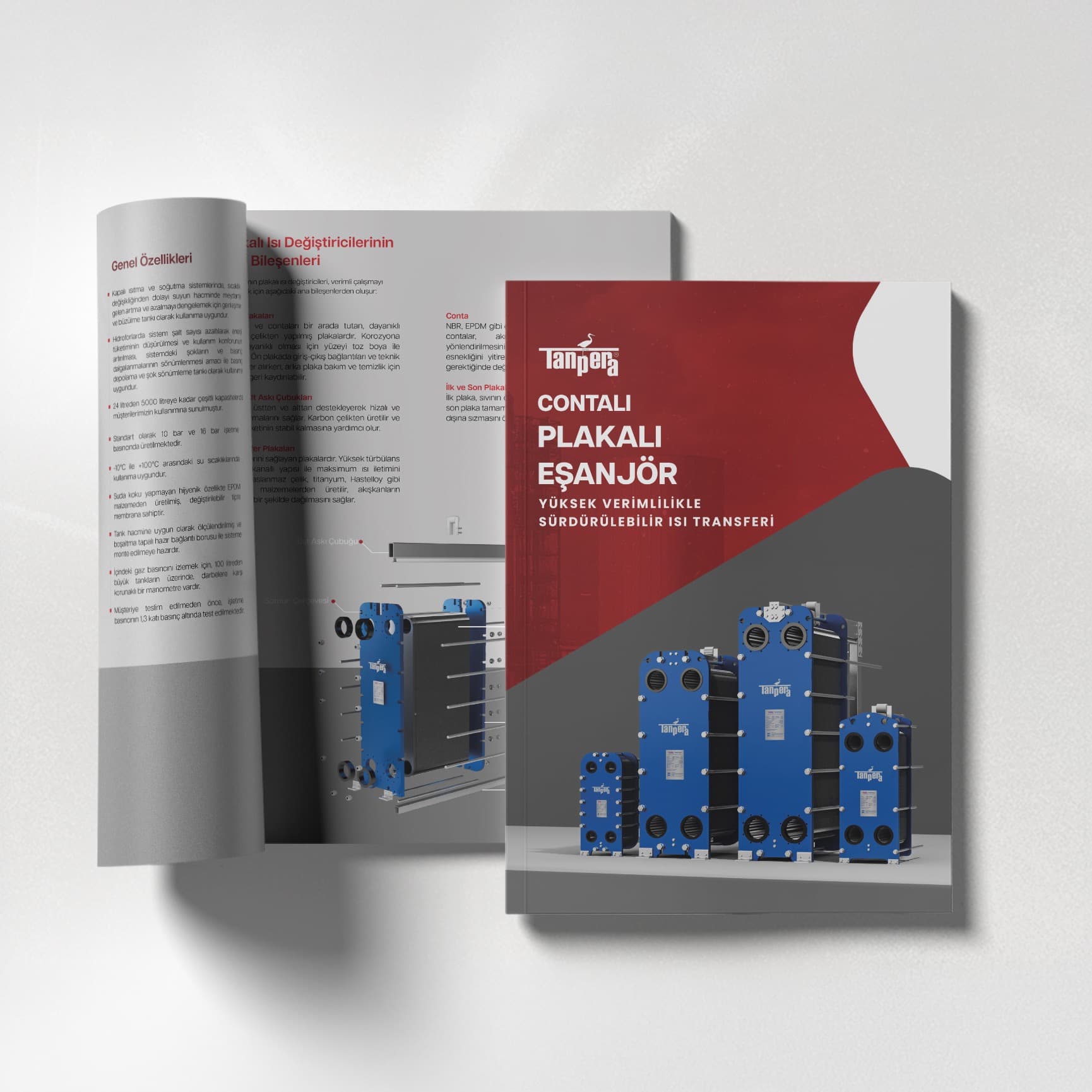
Explore the detailed brochure
Find Tanpera product groups, technical advantages and application recommendations in the brochure.
- Product groups
- Technical advantages
- Application recommendations
References & standards
- ISO 9001:2015 — Quality management systems — Quality reference for production and project processes
Frequently Asked Questions
Which heat exchanger types are used in a sugar plant?
Juice heating, condensate and general process circuits typically use gasketed plate heat exchangers; evaporation and concentration lines use evaporators. The Tanpera engineering team recommends the best configuration from fluid viscosity, fouling and pressure class.
Is there an equipment difference between beet and cane processes?
The core heat-transfer principles are similar; cane processes often see higher temperatures and different juice viscosity profiles. Sizing is done separately from the project data.
How is an evaporator selected for evaporation circuits?
Effect count, steam pressure, juice concentration and target steam economy are the core inputs. Tanpera TES-series evaporators are sized to the project specification.
How often is plate cleaning required in sugar processes?
Scale and organic deposits reduce plate performance. Depending on the juice line, CIP or mechanical cleaning every 6–12 months should be assessed. Rising pressure drop is an early signal that cleaning is needed.
Which data are required for sizing?
Flow rate, inlet–outlet temperatures, fluid properties (viscosity, density), design pressure, fouling profile and existing plant connection details form the minimum input set.