

Semi-Welded Plate Heat Exchanger
Plate Heat Exchangers
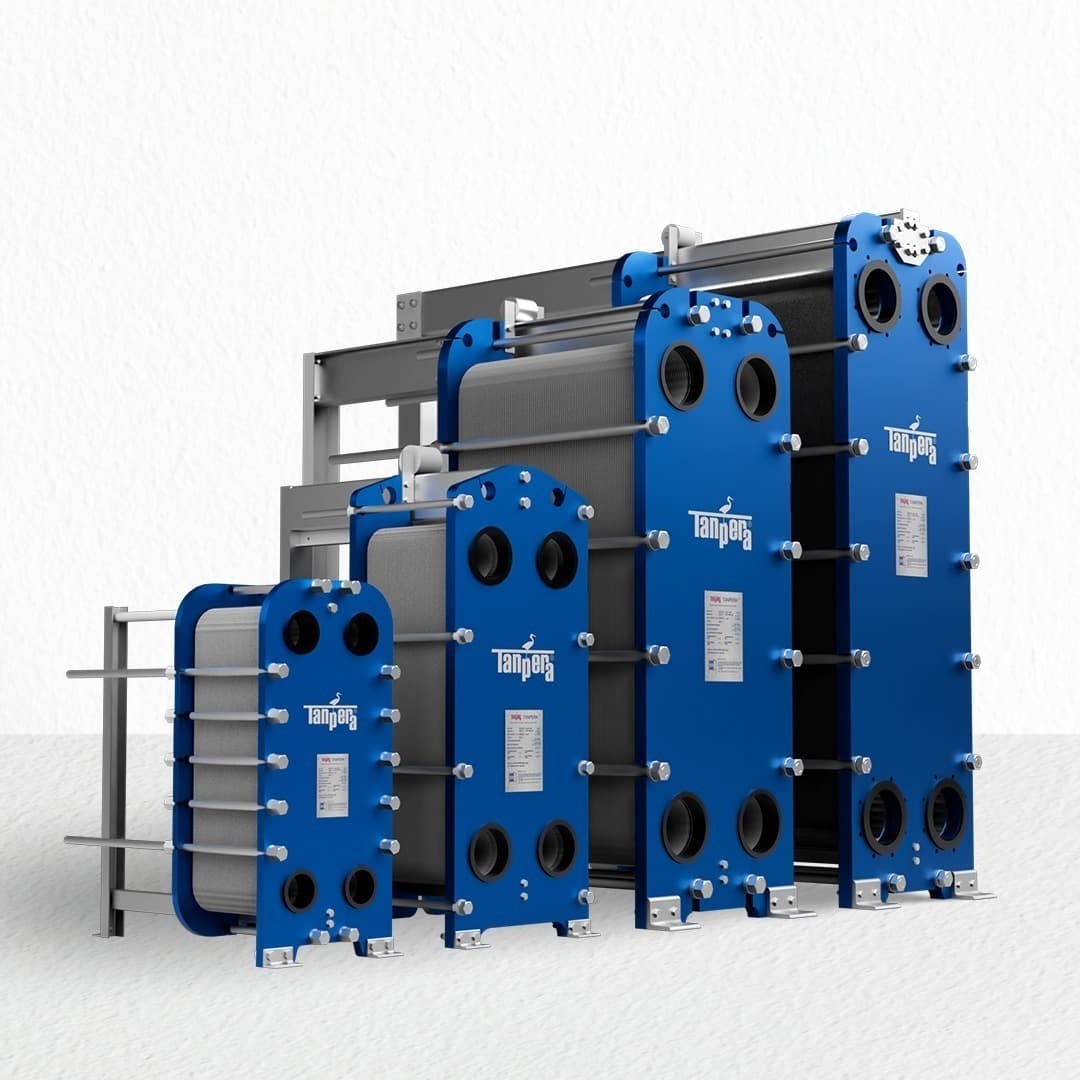
Tanpera Semi-Welded Plate Heat Exchangers are preferred in applications where the two fluids have different gasket requirements. In steam/oil and ammonia gas/water applications, each fluid has a different gasket requirement.
About the Semi-Welded Plate Heat Exchanger
Tanpera Semi-Welded Plate Heat Exchangers are preferred in applications where the two fluids have different gasket requirements. In steam/oil and ammonia gas/water applications, each fluid has a different gasket requirement.
Semi-welded heat exchangers are used in the refrigeration industry as evaporators, condensers, and desuperheaters. Especially in food storage facilities with high cooling capacity demand, semi-welded heat exchangers occupy far less space than shell-and-tube exchangers and provide close temperature approach with high heat transfer capability.
Particularly in the refrigeration sector, energy recovery is achieved with desuperheater applications. Refrigerant gas leaving compressors is in the superheated phase; within the condenser it first passes to the saturated phase and then condenses.
In desuperheater applications, semi-welded heat exchangers enable heat recovery during the transition from the superheated to the saturated phase.
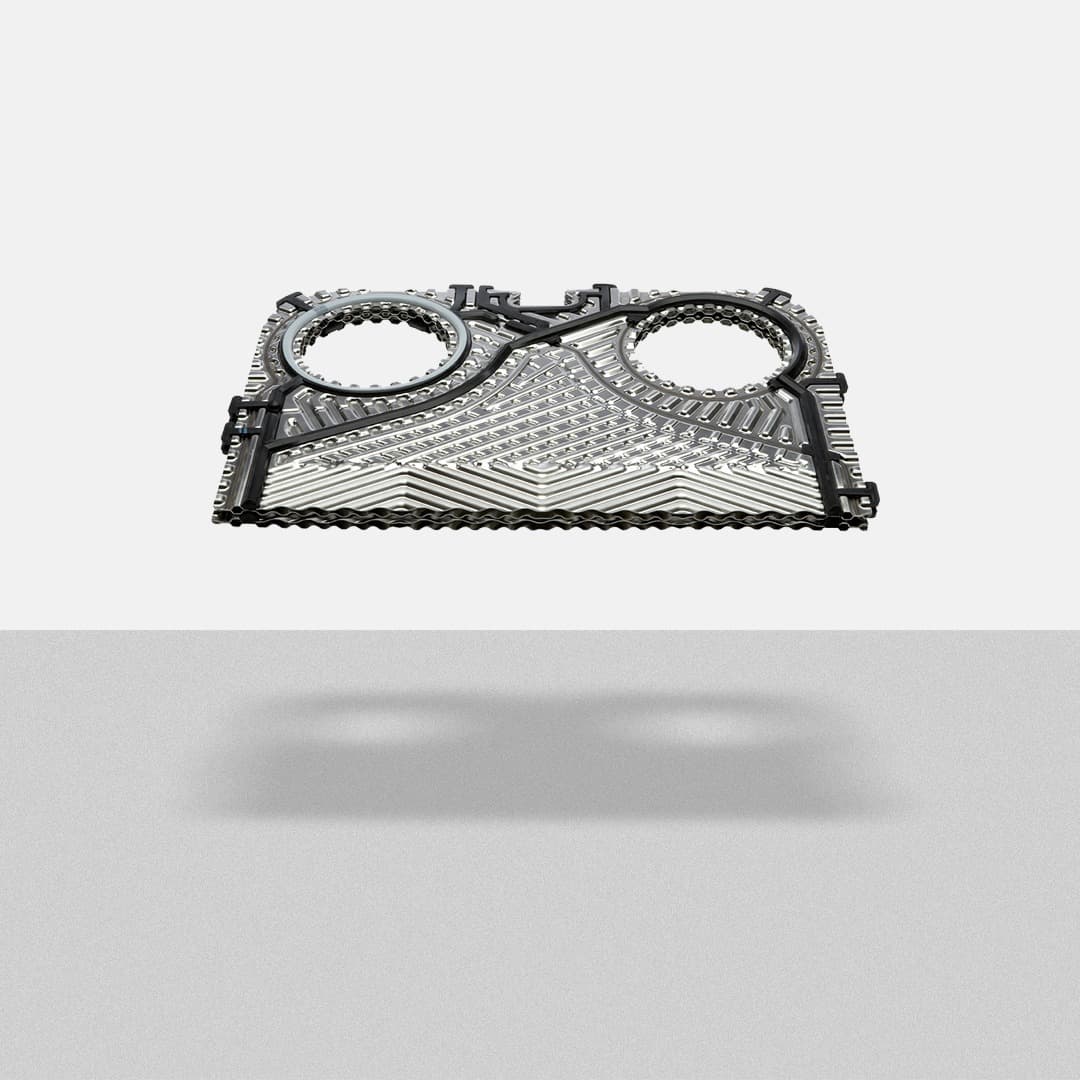
Plate Structure
Key Features
- Different gasket materials per circuit: Viton, PTFE, NBR, EPDM, and chloroprene options.
- High heat transfer efficiency in evaporator, condenser, and desuperheater applications.
- Compact installation and close temperature approach in food storage and refrigeration plants.
- Energy recovery with desuperheater during the transition from superheated to saturated phase.
- High pressure resistance and reliable sealing with laser-welded plate packs.
Installation and Commissioning
During commissioning, pressure testing, flow adjustment, and temperature control must be performed. The Tanpera technical team provides field support and training.
After-Sales Services
System efficiency is preserved over the long term through periodic inspection and performance measurement.
Frequently Asked Questions
A Semi-Welded Plate Heat Exchanger joins plate pairs by laser welding and seals between plate packs with a ring gasket. A welded channel is used on aggressive or high-pressure fluid circuits and a gasketed channel on the other circuit. In applications such as steam/oil and ammonia gas/water where the two fluids have different gasket requirements, a suitable gasket material can be selected for each circuit.
Semi-welded plate heat exchangers combine the modularity of gasketed plate exchangers with the high pressure resistance of laser-welded plate packs. Compared with shell-and-tube exchangers, they offer a much more compact layout and higher heat transfer efficiency, providing close temperature approach in food storage and refrigeration plants.
Plates are AISI 304, AISI 316, or titanium; ring gaskets are NBR HT / EPDM HT; channel gaskets are selected as NBR, EPDM, Viton, PTFE, or chloroprene according to fluid chemistry. Connections are stainless steel or titanium, in EN 1092-1 PN16/25/40 flange class.
Used as evaporator, condenser, and desuperheater in the refrigeration industry; in food storage and vegetable oil processes; chemical and petrochemical; and power plant steam/cooling circuits. Especially preferred in industrial applications where the two fluids have different gasket requirements.
In desuperheater applications, heat is recovered as superheated refrigerant gas leaving the compressor transitions to the saturated phase. High heat transfer coefficient and close temperature approach reduce energy consumption in refrigeration and process lines.
Required capacity is calculated from fluid type, flow rate, inlet–outlet temperatures, operating pressure, and circuit role (evaporator, condenser, desuperheater). The Tanpera engineering team determines plate type, plate count, and gasket material and recommends a suitable configuration.
For clean fluids, an annual general inspection may be sufficient; for chemical or refrigeration circuits, plate and gasket checks every 6–12 months are recommended. Gaskets and clamping elements should be checked at every service; early intervention is advised when performance drops.
You can download the English brochure and user manual as PDF from the Documents tab on the product page. Up-to-date technical documents are published regularly in this area.
You can submit your project details via the Quote Form on the product page or contact our sales team at sales@tanpera.com. Our engineering team will get in touch for sizing and pricing based on your project data.