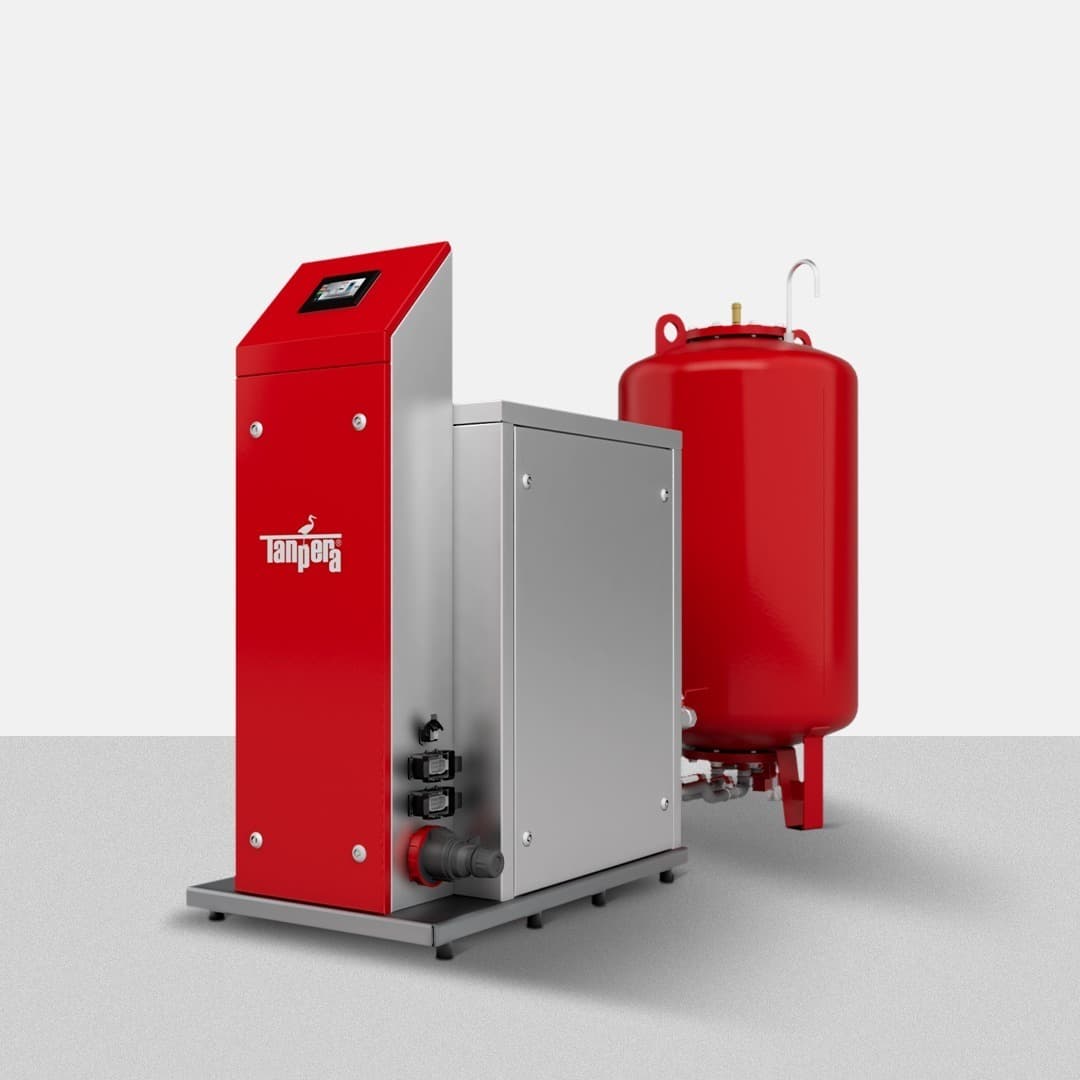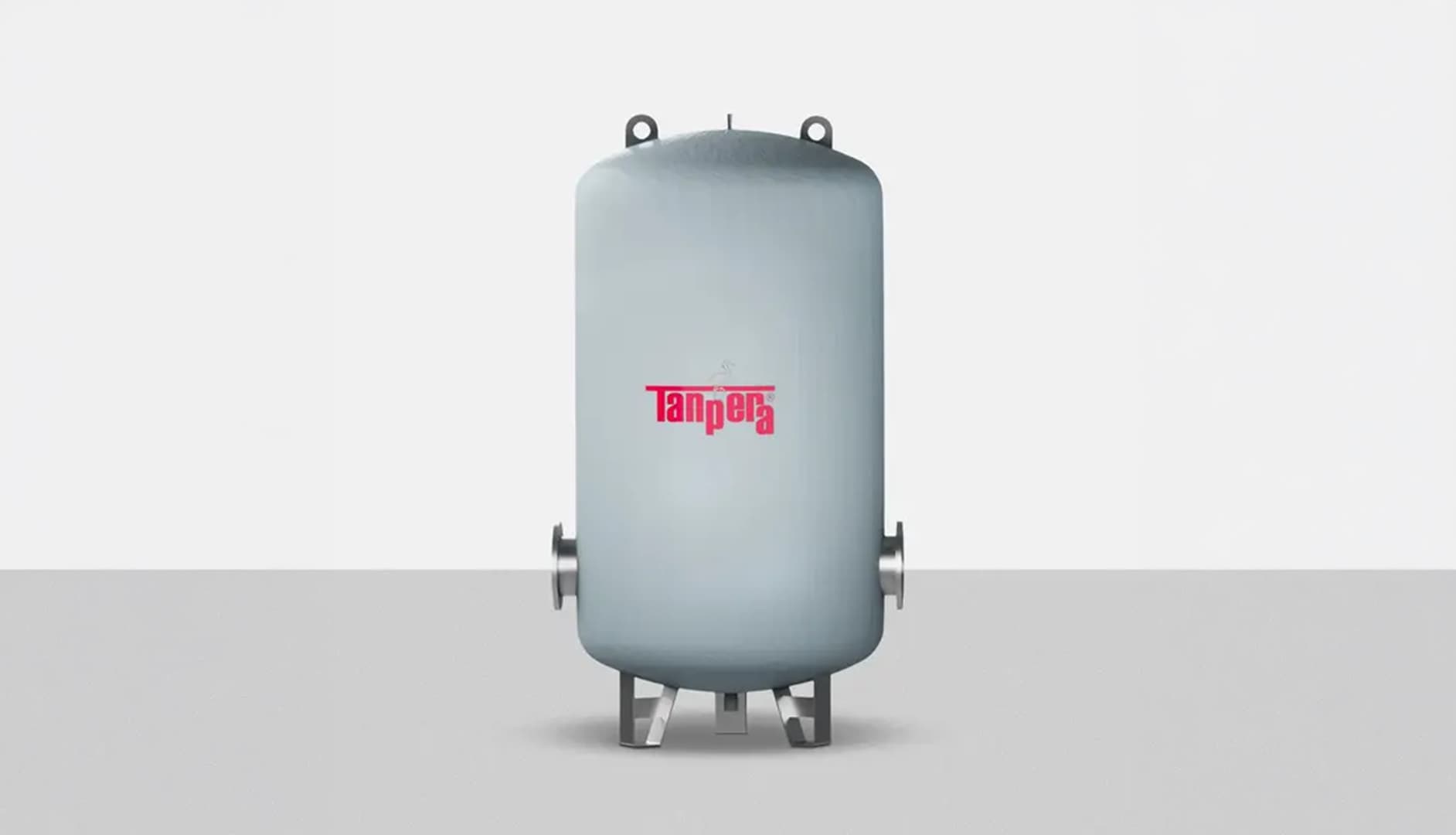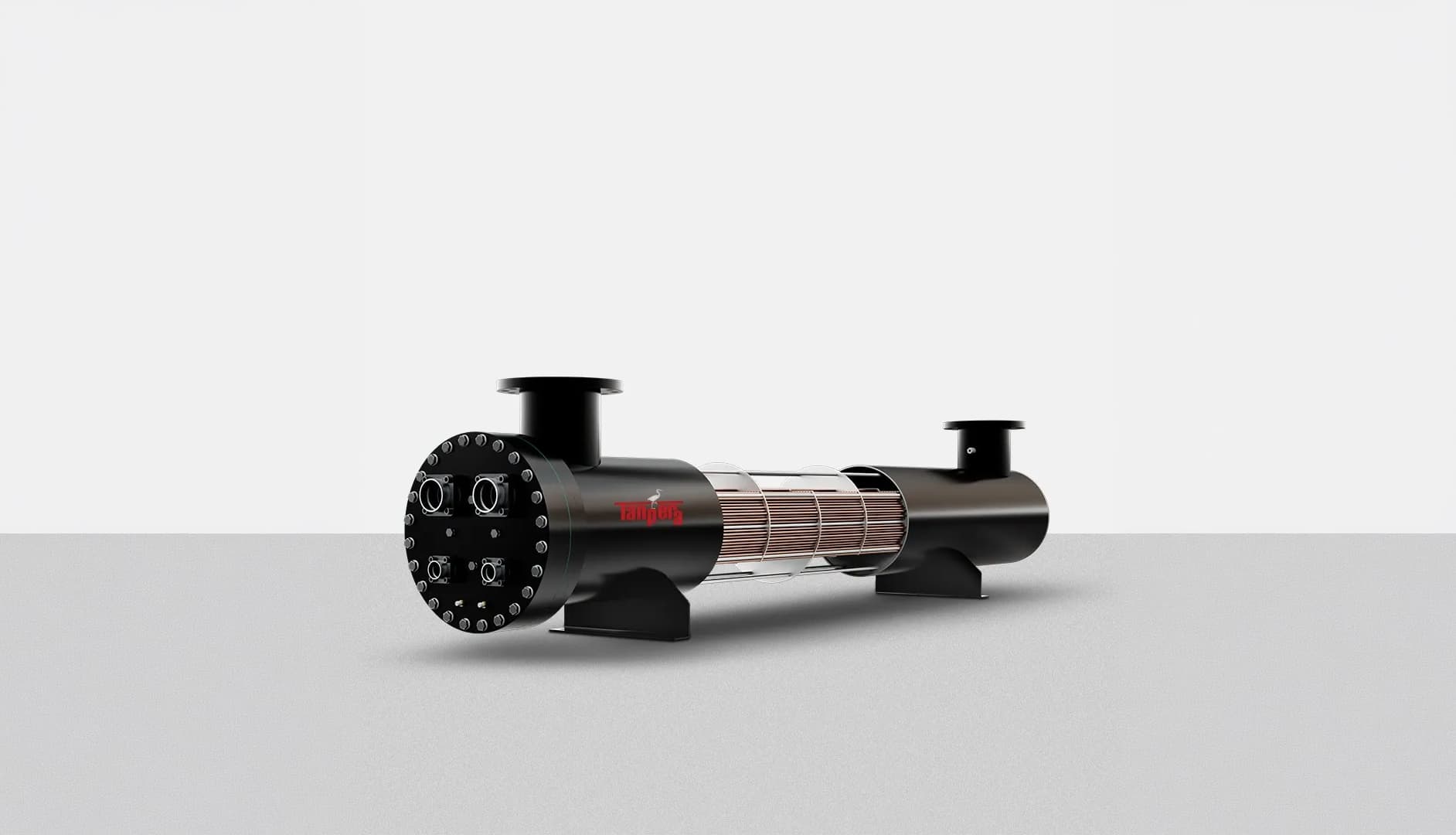


What Is a Vacuum Degasser?
What Is a Vacuum Degasser? — Tanpera engineering guidance covering process requirements, design criteria and recommended equipment.
Key takeaways
- — Tanpera engineering guidance covering process requirements, design criteria and recommended equipment.
- Reduces corrosion and pitting risk from dissolved oxygen
- Prevents air locks, noise and micro air bubbles
- Protects heat-transfer efficiency in heat exchangers and radiators
- Lowers cavitation risk on the pump suction side
Vacuum Degasser Operating Principle
System water is held under controlled vacuum so dissolved gases are separated and vented to atmosphere.
- Reduces corrosion and pitting risk from dissolved oxygen
- Prevents air locks, noise and micro air bubbles
- Protects heat-transfer efficiency in heat exchangers and radiators
- Lowers cavitation risk on the pump suction side
- Limits pressure fluctuations in closed-loop systems
- Recommended for central stations and high-ΔT applications
Application Scenarios
Typical circuit locations and expected benefits:
| Process step | Heat-transfer duty | Recommended equipment |
|---|---|---|
| Main collector line | Dissolved-gas removal from system water | Vacuum degasser |
| Expansion line | Gas separation at the low-pressure point | Vacuum degasser |
| High-temperature circuit | Oxygen-driven corrosion control | Vacuum degasser + air separator |
| Cooling circuit | Prevent micro air and efficiency loss | Vacuum degasser |
Design Parameters
Minimum engineering inputs for sizing:
- Primary and secondary circuit flow rates and inlet–outlet temperatures (°C)
- System static height and operating pressure
- Glycol ratio and fluid viscosity (cooling circuits)
- Part-load profile and minimum equipment flow
- Expansion, degasser and buffer-tank integration
- Maintenance clearance and plant-room layout constraints
Tanpera Approach
End-to-end support matched to project and operating needs:
- Project-based thermal and hydraulic sizing
- Site installation, commissioning and performance testing
- Process integration backed by sector reference experience
- After-sales spare plates, gaskets and service network
Recommended Tanpera Products
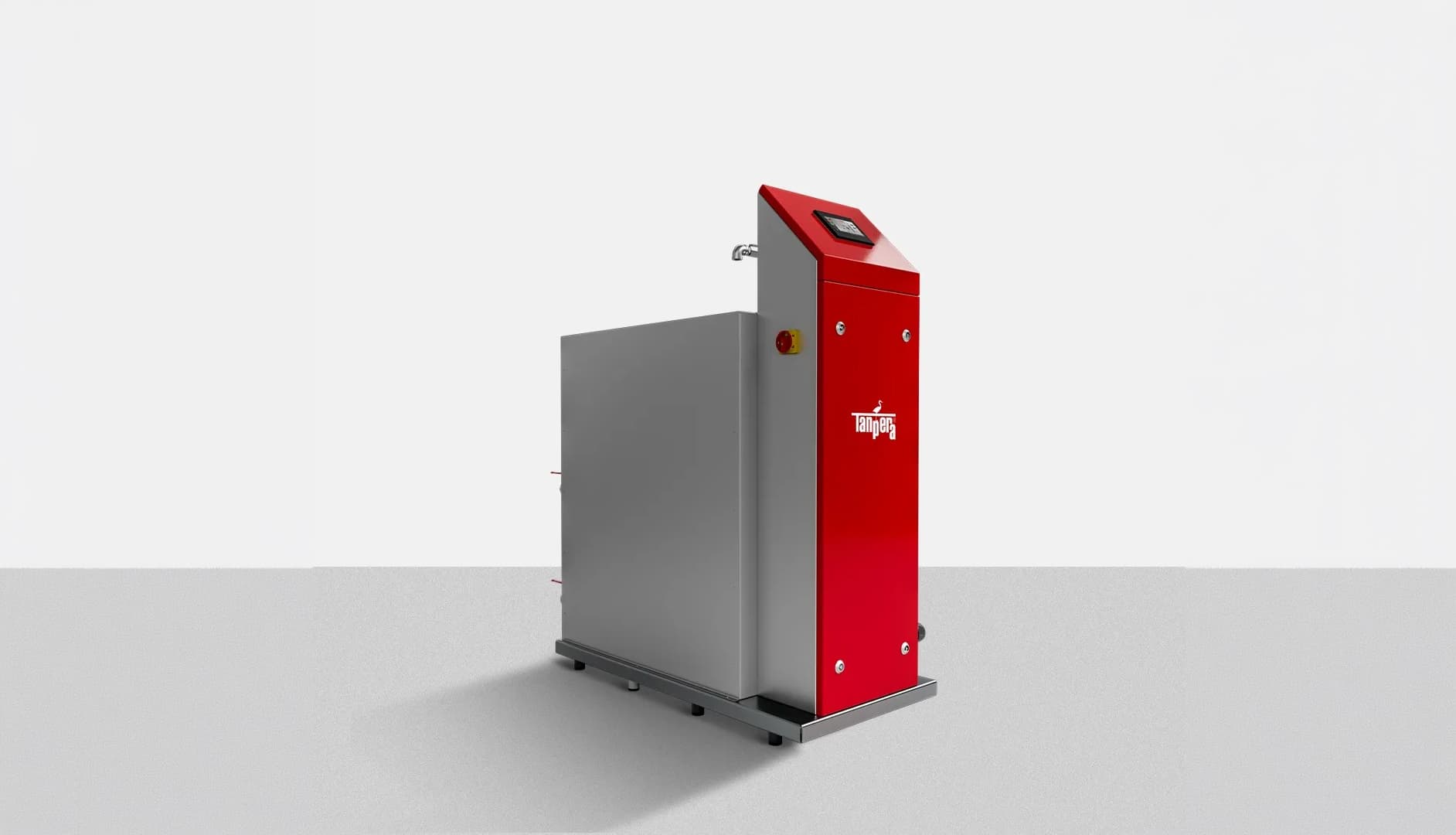
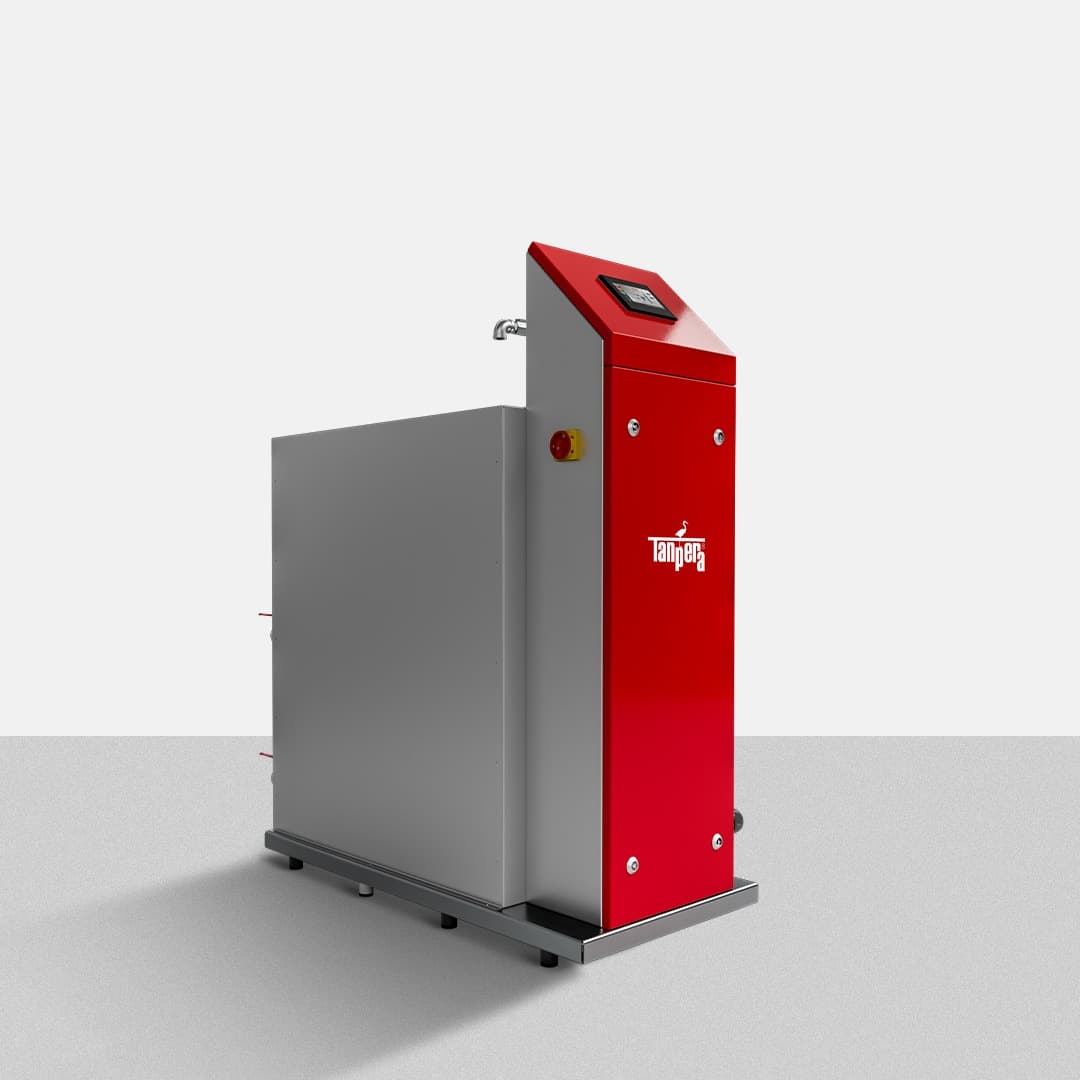
VEGA Vacuum Degasser
Oxygen and dissolved-gas removal. Corrosion and efficiency protection for heating and cooling circuits.
Equipment Selection Notes
Recommended equipment groups for this application:
- An air separator collects free gas; a vacuum degasser targets dissolved gas — they serve different functions
- Installation point is set on the main collector or expansion line per the manufacturer flow scheme
- Annual vacuum performance testing and pump control are recommended
- On large central plants, the vacuum degasser is assessed together with the pressurization unit
Related Solution Center Articles
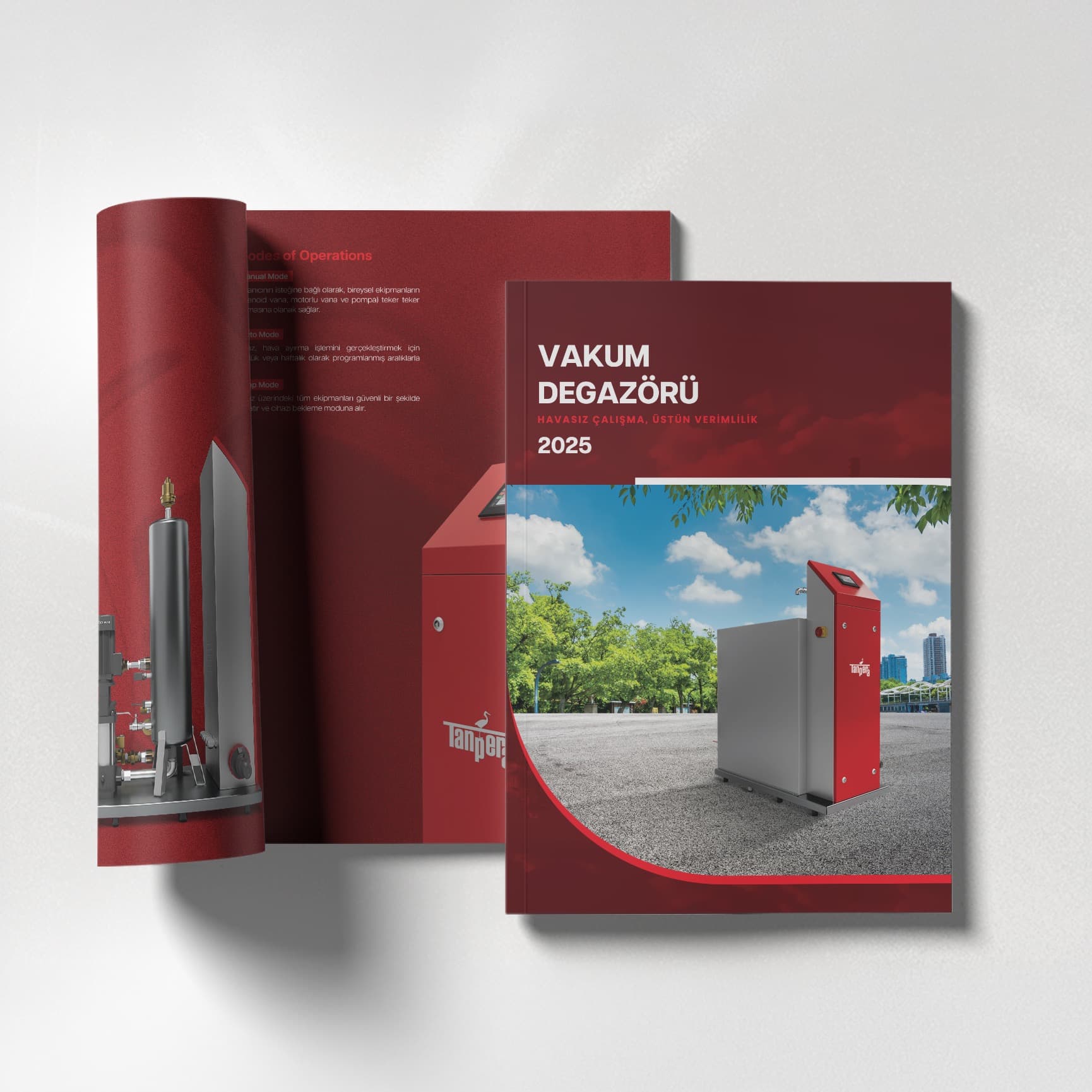
Explore the detailed brochure
Find Tanpera product groups, technical advantages and application recommendations in the brochure.
- Product groups
- Technical advantages
- Application recommendations
References & standards
- ASHRAE Handbook — HVAC Systems and Equipment — Central heating/cooling circuits and hydraulic balancing design
- AHRI Standard 400 — Liquid to Liquid Heat Exchangers — Plate heat exchanger performance classification
Frequently Asked Questions
Are a vacuum degasser and an air separator the same?
No. An air separator collects free gas; a vacuum degasser removes dissolved oxygen and nitrogen under vacuum. On high-temperature systems, both may be used together.
Is a vacuum degasser required on every closed loop?
It may not be mandatory on small, low-temperature residential circuits. It is recommended on central stations, high-ΔT and long-run commercial plants.
How should energy consumption be assessed?
A vacuum degasser runs on a low-power pump. Operating gains from preventing corrosion and efficiency loss usually outweigh its energy use.
What should the maintenance interval be?
An annual general inspection, vacuum-level measurement and purger/pump performance test are recommended. Follow the periodic checklist in the operating manual.