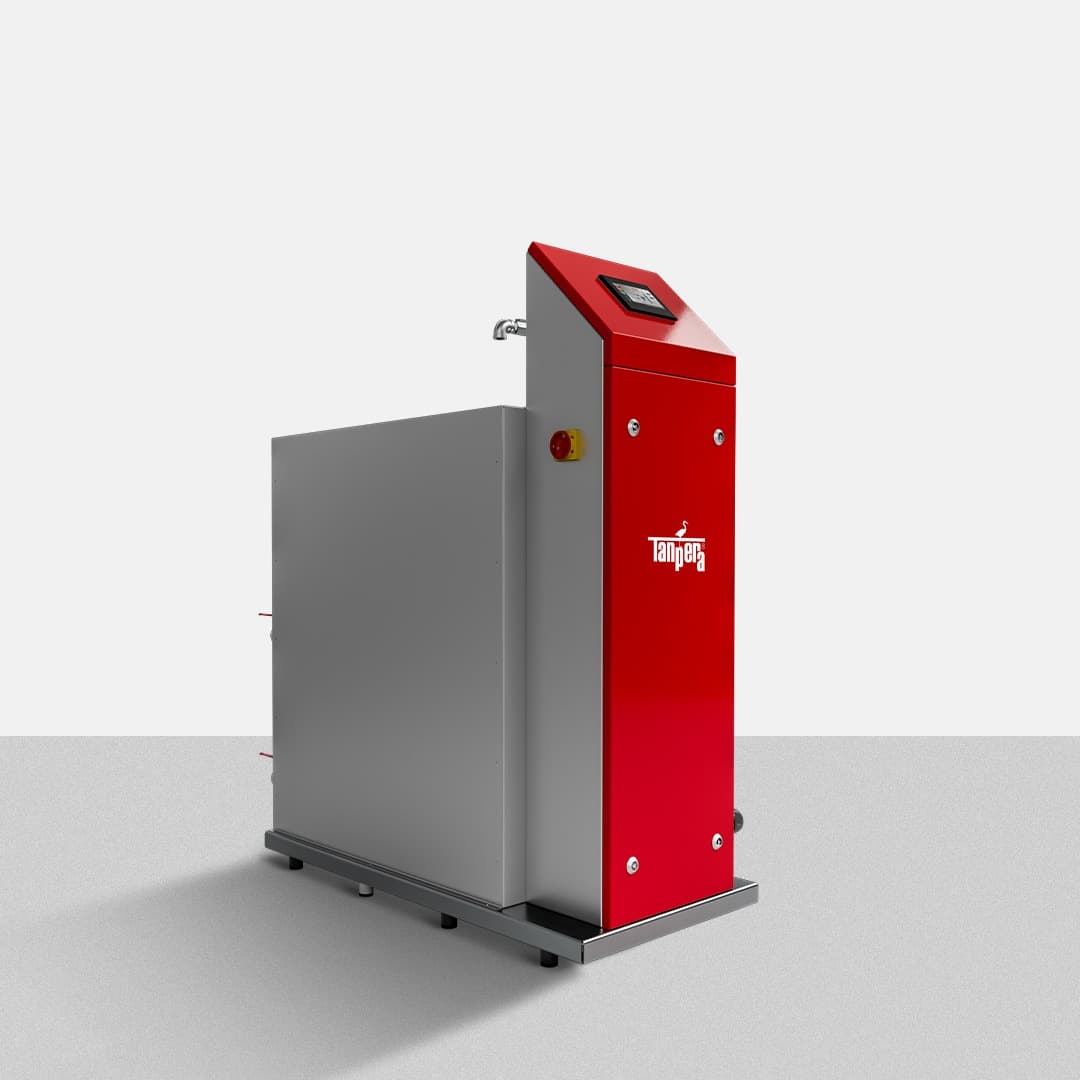


Membrane Tank or Pumped Expansion System?
Membrane Tank or Pumped Expansion System? — Tanpera engineering guidance covering process requirements, design criteria and recommended equipment.
Key takeaways
- Membrane Tank or Pumped Expansion System?
- — Tanpera engineering guidance covering process requirements, design criteria and recommended equipment.
- Total system water volume and expansion quantity
- Minimum and maximum operating temperature range
- Static height and pump pressure class
Selection Criteria Summary
In project engineering, the following parameters should be assessed together.
- Total system water volume and expansion quantity
- Minimum and maximum operating temperature range
- Static height and pump pressure class
- Rate of flow change and part-load profile
- Plant-room space and maintenance access
- Air formation and gas-removal strategy
Membrane Tank vs Pumped Expansion
Recommended approach by typical project profile:
| Process step | Heat-transfer duty | Recommended equipment |
|---|---|---|
| Residential / small commercial | Static pressure, limited volume | Membrane expansion tank |
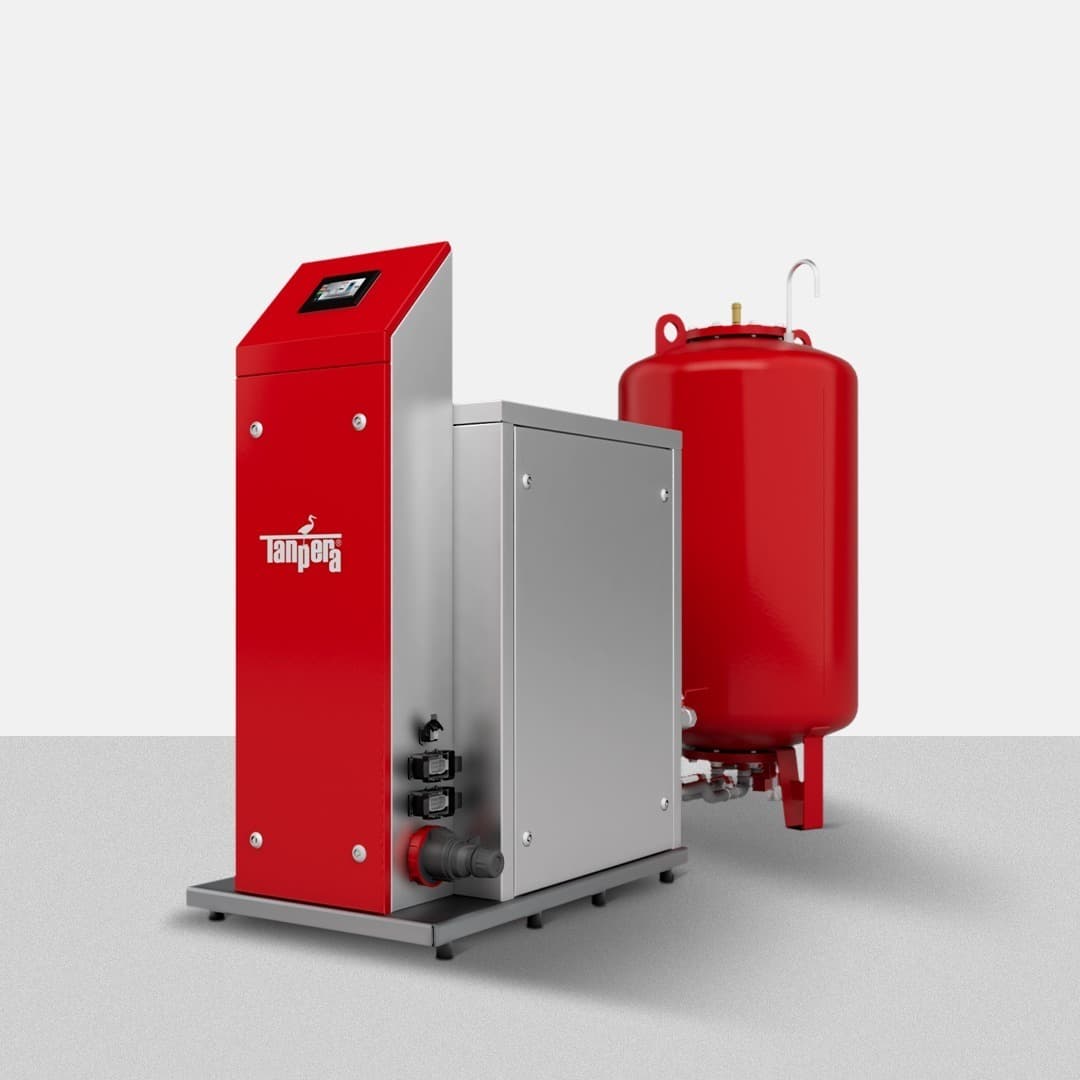
| Mall / hospital / campus | Active pressure control, large volume | Pumped expansion (NOVA) |
| High flow variation | Low pressure fluctuation | Pumped expansion (NOVA) |
| Tight plant room | Compact static solution | Membrane expansion tank |
Design Parameters
Minimum engineering inputs for sizing:
- Primary and secondary circuit flow rates and inlet–outlet temperatures (°C)
- System static height and operating pressure
- Glycol ratio and fluid viscosity (cooling circuits)
- Part-load profile and minimum equipment flow
- Expansion, degasser and buffer-tank integration
- Maintenance clearance and plant-room layout constraints
Tanpera Approach
End-to-end support matched to project and operating needs:
- Project-based thermal and hydraulic sizing
- Site installation, commissioning and performance testing
- Process integration backed by sector reference experience
- After-sales spare plates, gaskets and service network
Recommended Tanpera Products
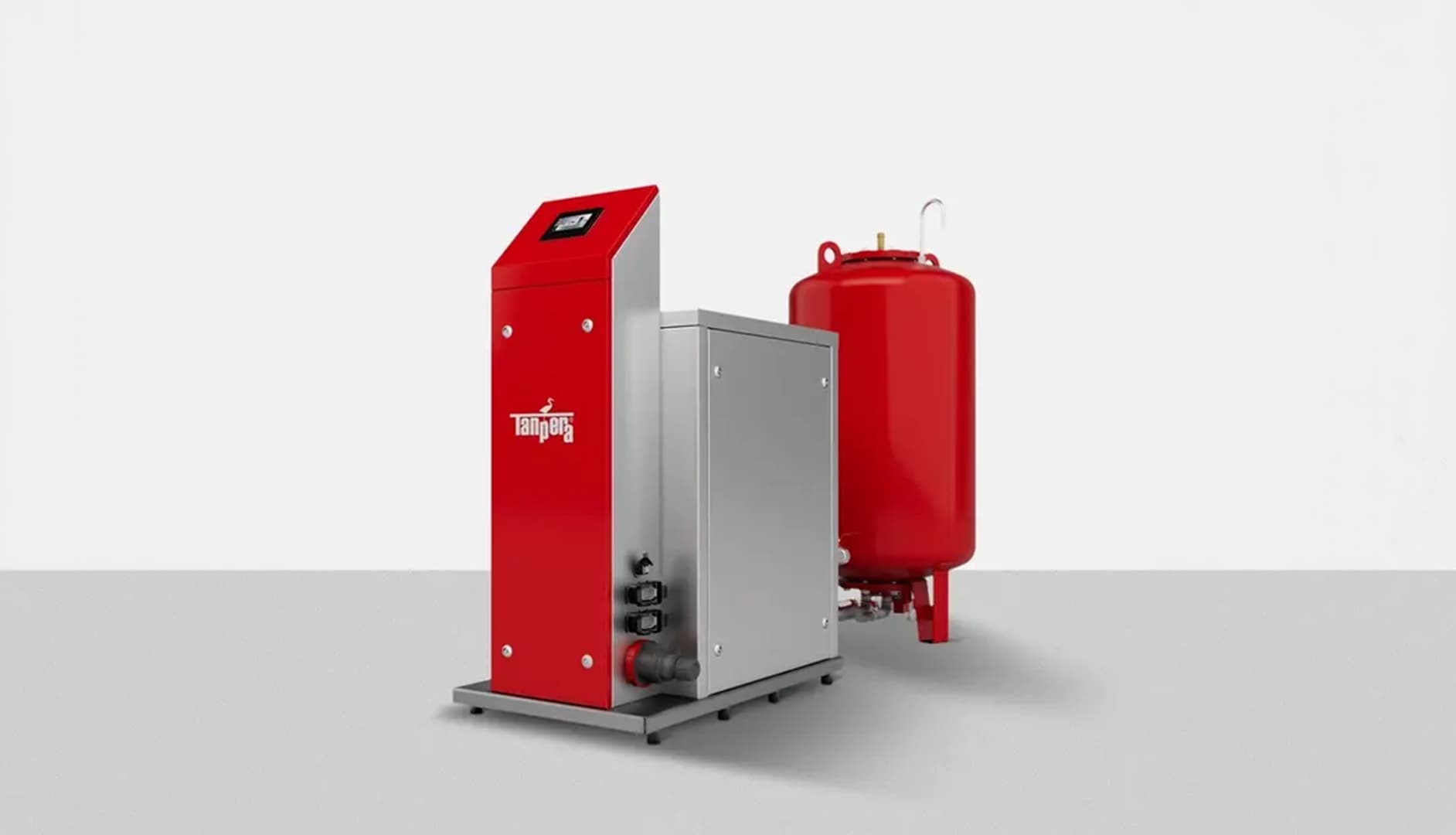
NOVA Pumped Expansion and Pressurization Unit
Pressure control and expansion management in closed-loop systems.
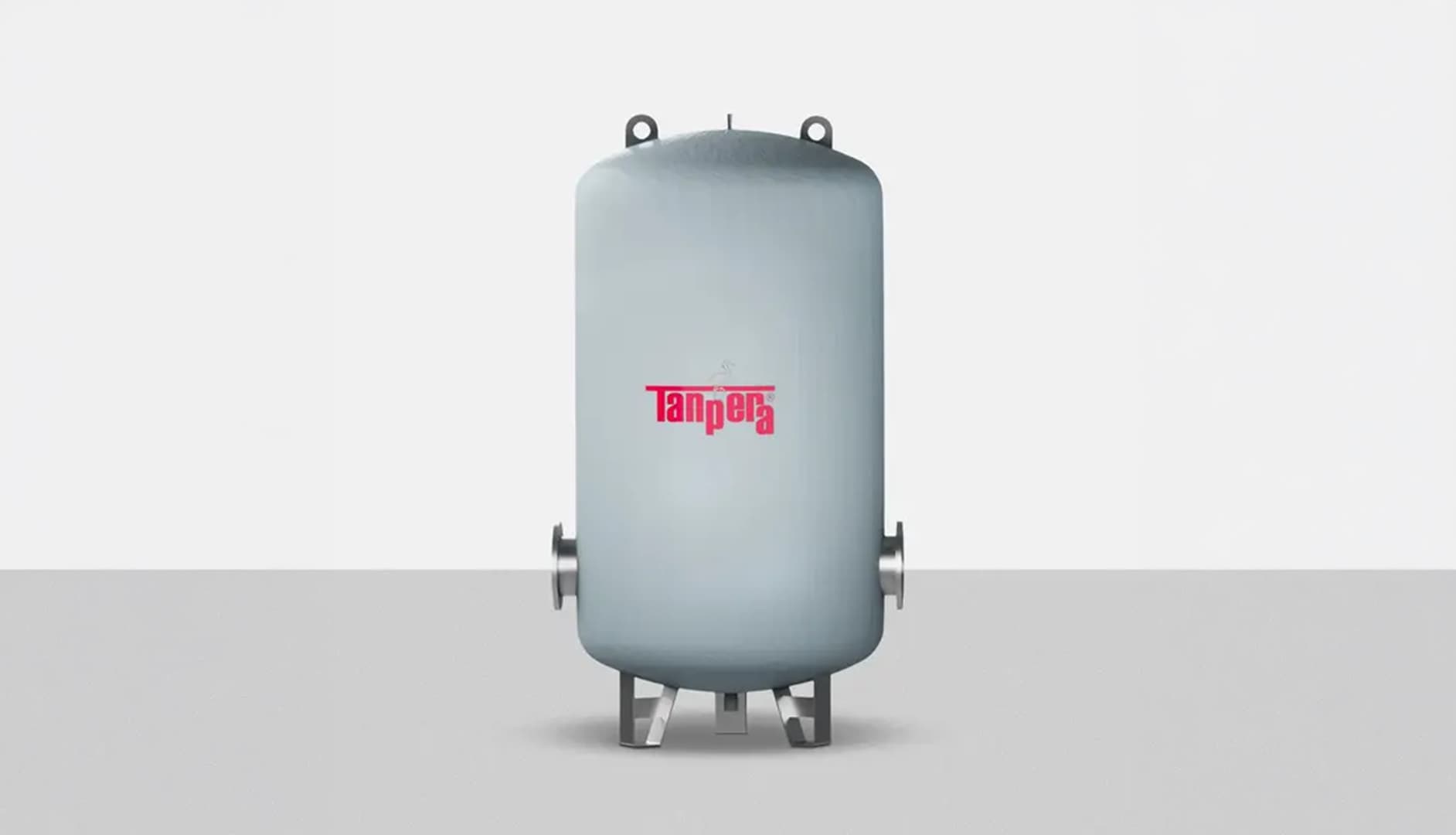
Buffer (Thermal Balance) Tank
Hydraulic balance and load buffering. Capacity reserve for central heating and cooling circuits.
Equipment Selection Notes
Recommended equipment groups for this application:
- On membrane tanks, pre-charge pressure is set below system operating pressure per the manufacturer table
- Pumped expansion units provide an advantage on large-volume systems with active pressure control
- On large systems, evaluation together with a vacuum degasser is recommended
- Tanpera NOVA units are sized to project volume
Related Solution Center Articles
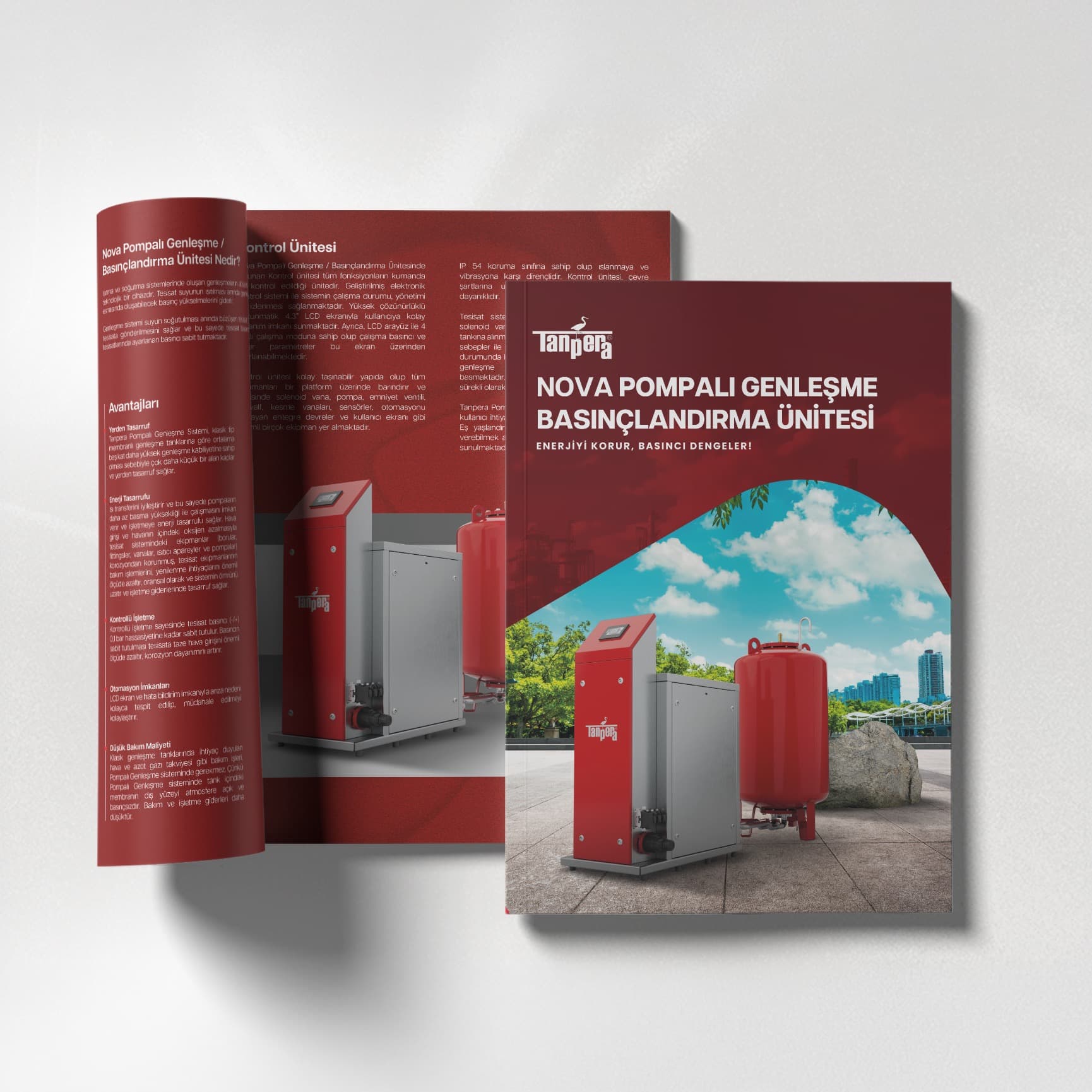
Explore the detailed brochure
Find Tanpera product groups, technical advantages and application recommendations in the brochure.
- Product groups
- Technical advantages
- Application recommendations
References & standards
- ASHRAE Handbook — HVAC Systems and Equipment — Central heating/cooling circuits and hydraulic balancing design
- AHRI Standard 400 — Liquid to Liquid Heat Exchangers — Plate heat exchanger performance classification
Frequently Asked Questions
Is it necessary to use both together?
A single solution is usually sufficient. On very large campus systems, a hybrid scenario may be assessed through engineering analysis.
How is membrane-tank pre-charge pressure set?
On an empty tank, set static pre-charge about 0.3–0.5 bar below the cold fill pressure. Use the manufacturer table for the project temperature as the reference.
On which projects is NOVA preferred?
It is preferred on shopping malls, hospitals, data centers and large plants with district-energy interfaces because of active pressure control and large volume capacity.
Which data are required for a quotation?
System volume, max/min temperature, pump pressure, static height and line length form the minimum input set.