

What Is a Stainless Steel Replaceable Coil Boiler?
The heat-transfer surface can be removed and replaced independently of the tank. Maintenance does not mean renewing the whole system.
Key takeaways
- The heat-transfer surface can be removed and replaced independently of the tank.
- Maintenance does not mean renewing the whole system.
- Coil construction independent of the tank
- Removable design
- Easier service and maintenance
Advantages and Applications
Boiler selection for domestic hot water should not be judged by capacity or volume alone. Long-term performance, ease of maintenance and how the equipment is serviced also decide the right solution.
A stainless steel replaceable coil boiler is a strong alternative where service access and sustained performance matter. In buildings with a heavy domestic hot water demand, the value sits beyond the first cost, in how the system is kept running.
What is a replaceable coil boiler?
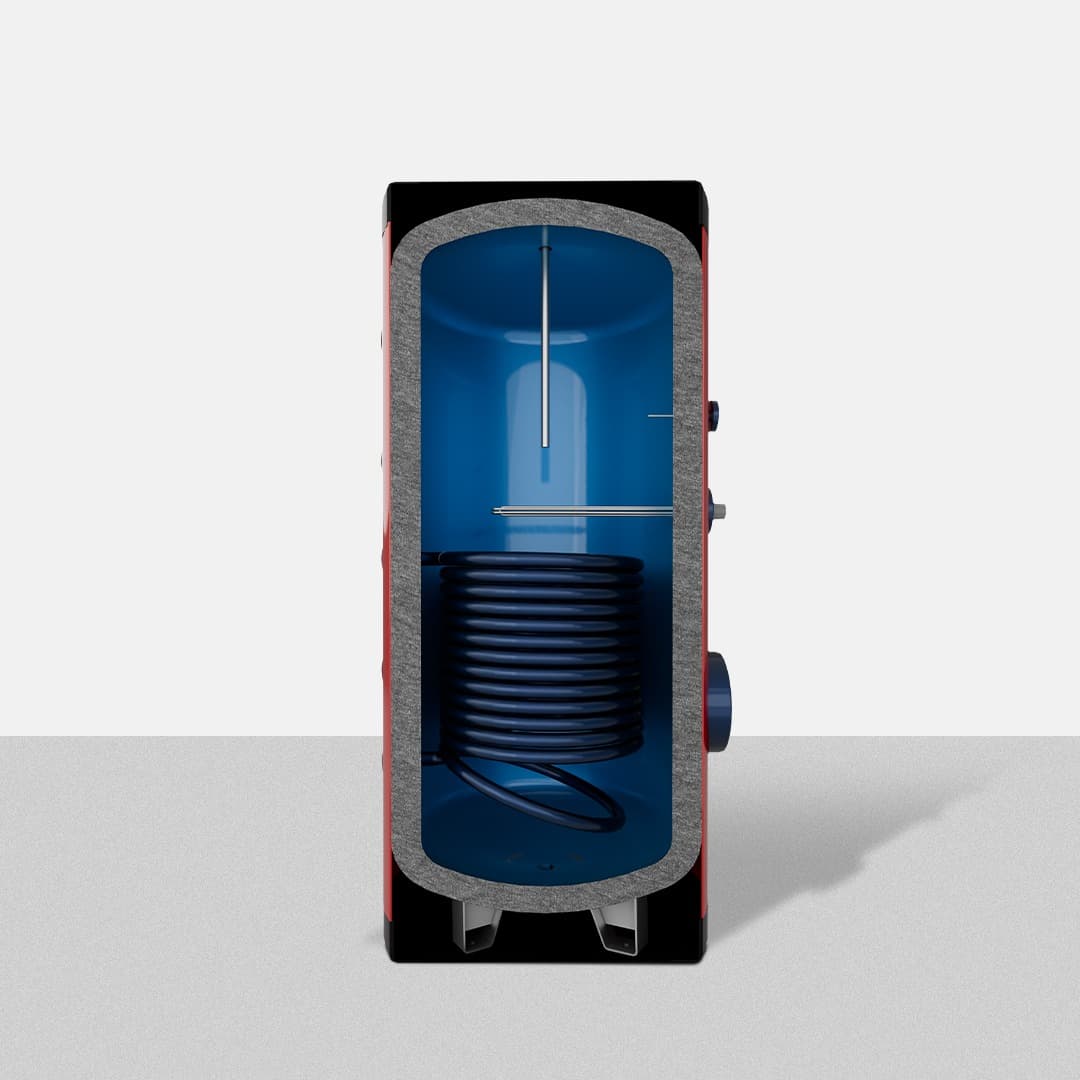
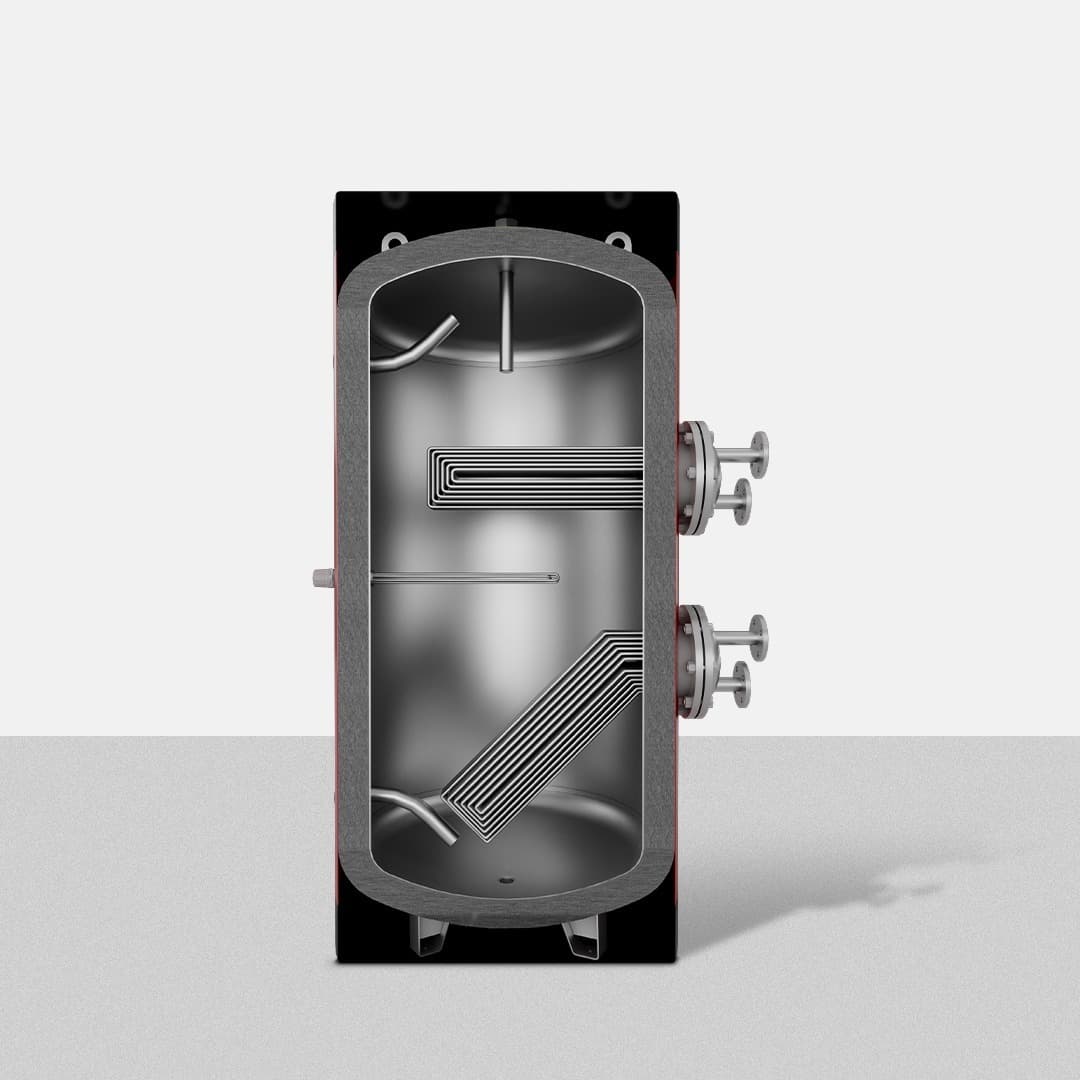
In a replaceable coil boiler the coil, which is the heat-transfer surface, can be removed and replaced independently of the tank. The real difference is not the tank. It is that the coil is built to be serviced.
The coil is integrated through a flange connection. When cleaning, maintenance or replacement is needed, the work stays on the coil instead of replacing the whole tank.
At Tanpera this arrangement is built with the replaceable coil boiler.
The difference is in the coil, not the tank
When performance loss starts at the coil, conventional arrangements can make maintenance harder. With a replaceable coil, the heat-transfer surface is treated separately from the tank.
During service, coil cleaning, maintenance or replacement can be enough. The whole tank does not have to be changed.
What stands out
The coil is treated as a service part, separate from the boiler shell.
- Coil construction independent of the tank
- Removable design
- Easier service and maintenance
- An accessible intervention point through the flange
- Direct access to the heat-transfer surface
When does it help?
Over time a domestic hot water system can scale, foul, corrode or lose performance. These problems often start at the heat-transfer surface, not in the whole system.
Scaling
Scale, fouling and deposits on the heat-transfer surface reduce performance. Direct access to the coil makes maintenance simpler.
Corrosion
Stainless steel coils offer a hygienic surface and high corrosion resistance. Local wear in aggressive fluids or demanding conditions can be handled on the coil, without replacing the tank.
Performance loss
When heat-transfer efficiency falls, system performance falls with it. A replaceable coil helps return the system to its previous performance in a faster, more practical way.
Replacing the whole system is not always required
Not every problem in a domestic hot water system calls for a new tank or a new system. If the issue is concentrated on the heat-transfer surface, a properly designed replaceable coil lets the work stay on that part.
That shortens maintenance and supports continuity of operation.
A system approach that creates long-term value
Replaceable coil boilers are one of the solutions whose operating advantage extends past the first investment. Ease of maintenance, operational continuity and system flexibility matter most where domestic hot water demand is heavy.
On the right project, the approach secures not only today’s need but the system’s future performance.
The product in this approach
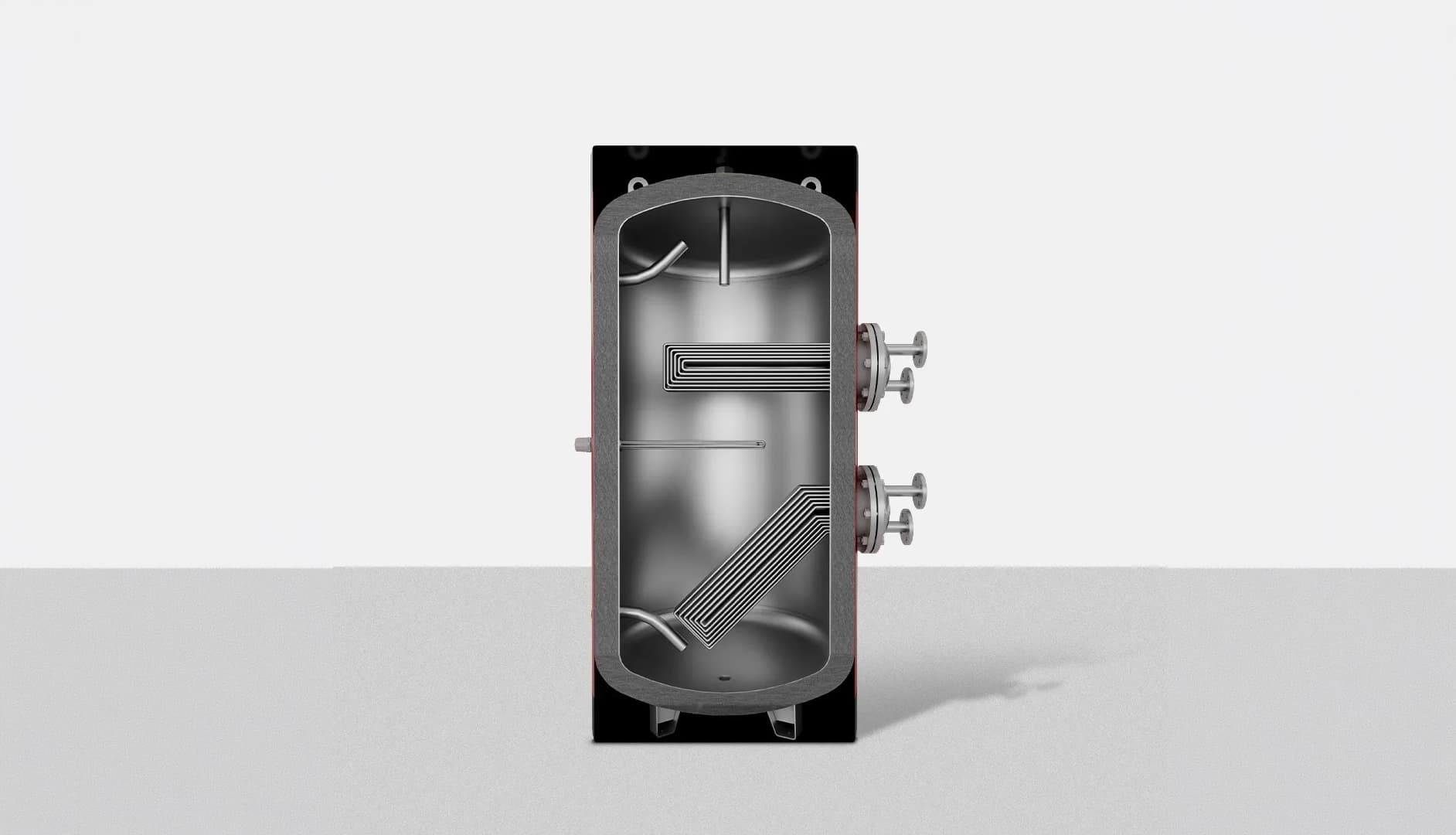
Replaceable Coil Boiler
The coil is removed through the flange. Scaling, corrosion or a drop in performance is handled on the coil, without renewing the tank.
Conclusion
Stainless steel replaceable coil boilers offer easier maintenance, accessible service and a long-term performance advantage in domestic hot water systems.
Sound engineering considers not only today, but the future of the system.
For the comparison between a rapid calorifier and a heat exchanger plus tank, see Rapid Calorifier or Heat Exchanger + Accumulation Tank? For the hot-water circuits, see Domestic Hot Water and Boiler Circuits.
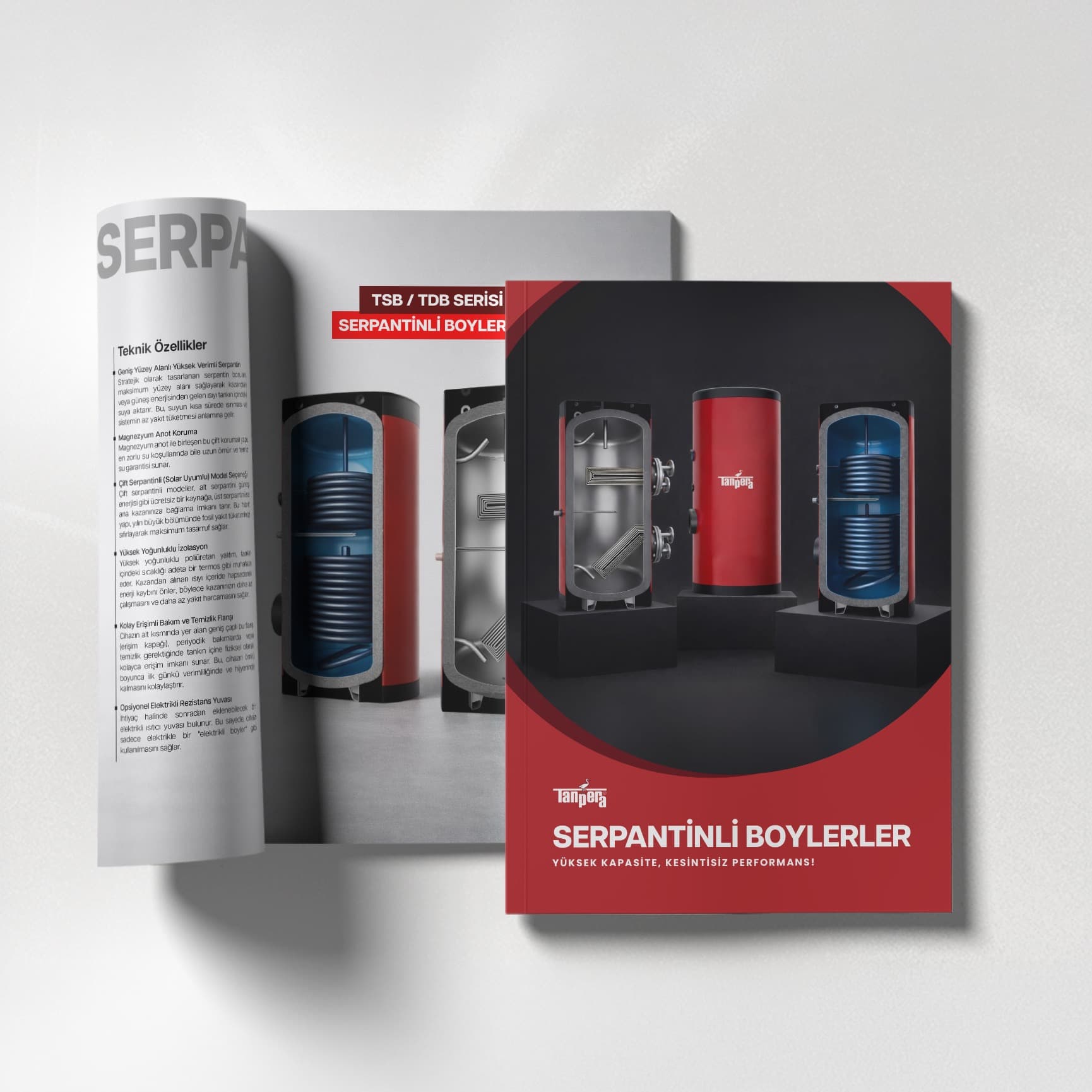
Explore the detailed brochure
Find Tanpera product groups, technical advantages and application recommendations in the brochure.
- Product groups
- Technical advantages
- Application recommendations
References & standards
- ASHRAE Handbook — HVAC Systems and Equipment — Central heating/cooling circuits and hydraulic balancing design
- AHRI Standard 400 — Liquid to Liquid Heat Exchangers — Plate heat exchanger performance classification
Frequently Asked Questions
What is a replaceable coil boiler?
It is a domestic hot water boiler whose coil, the heat-transfer surface, can be removed and replaced independently of the tank. The coil is integrated through a flange.
Where is the real difference?
The difference is not the tank. It is that the coil can be serviced. Cleaning, maintenance or replacement can stay on the coil.
When does it help?
It helps when scaling, fouling, corrosion or a drop in heat-transfer efficiency appears. Those problems often start at the heat-transfer surface, not in the whole system.
Does the whole tank have to be replaced?
If the problem is concentrated on the heat-transfer surface, the tank or the system does not have to be replaced. Work on the coil can be enough.
What does it add over the long term?
Easier maintenance, operational continuity and system flexibility. On the right project it secures future performance as well as today’s need.