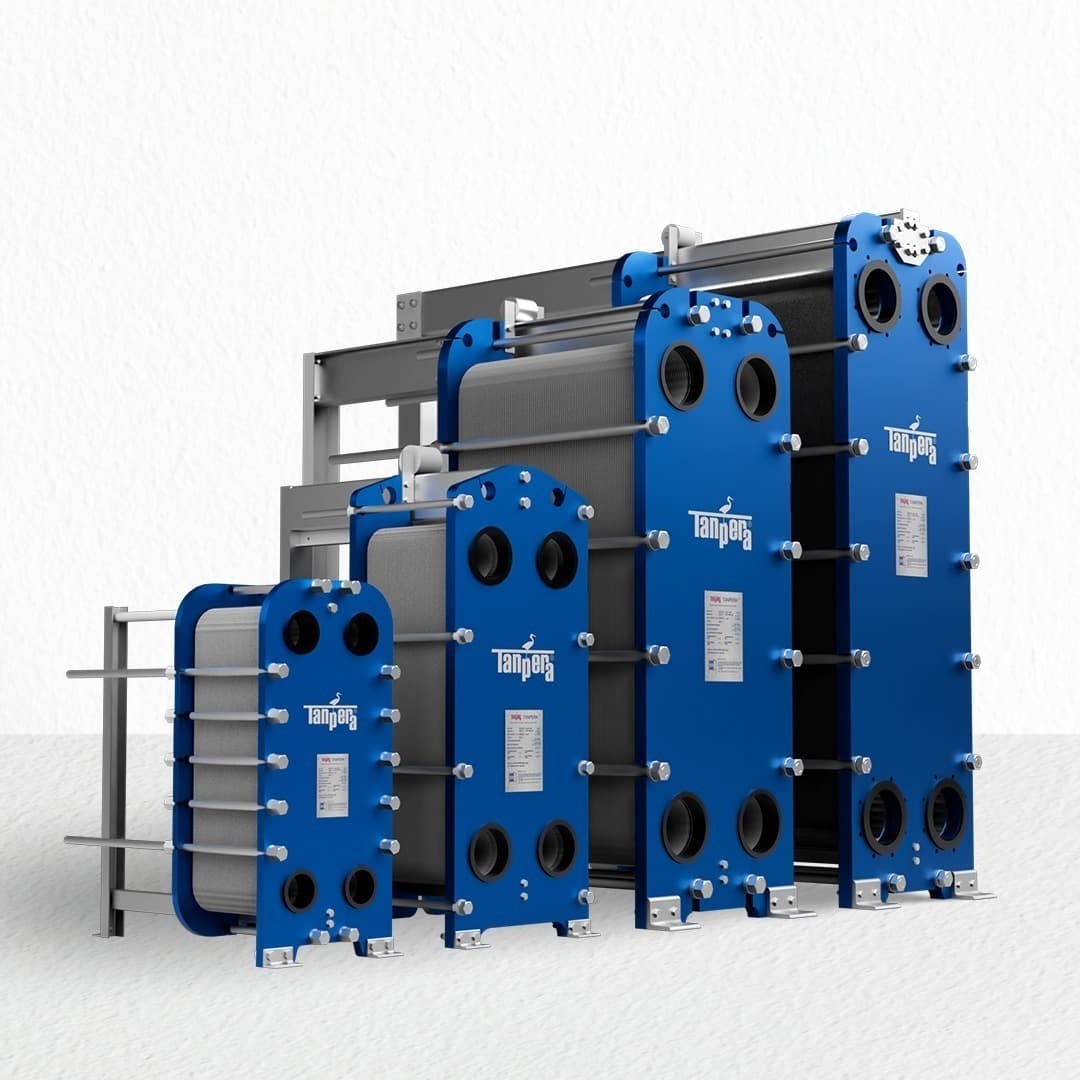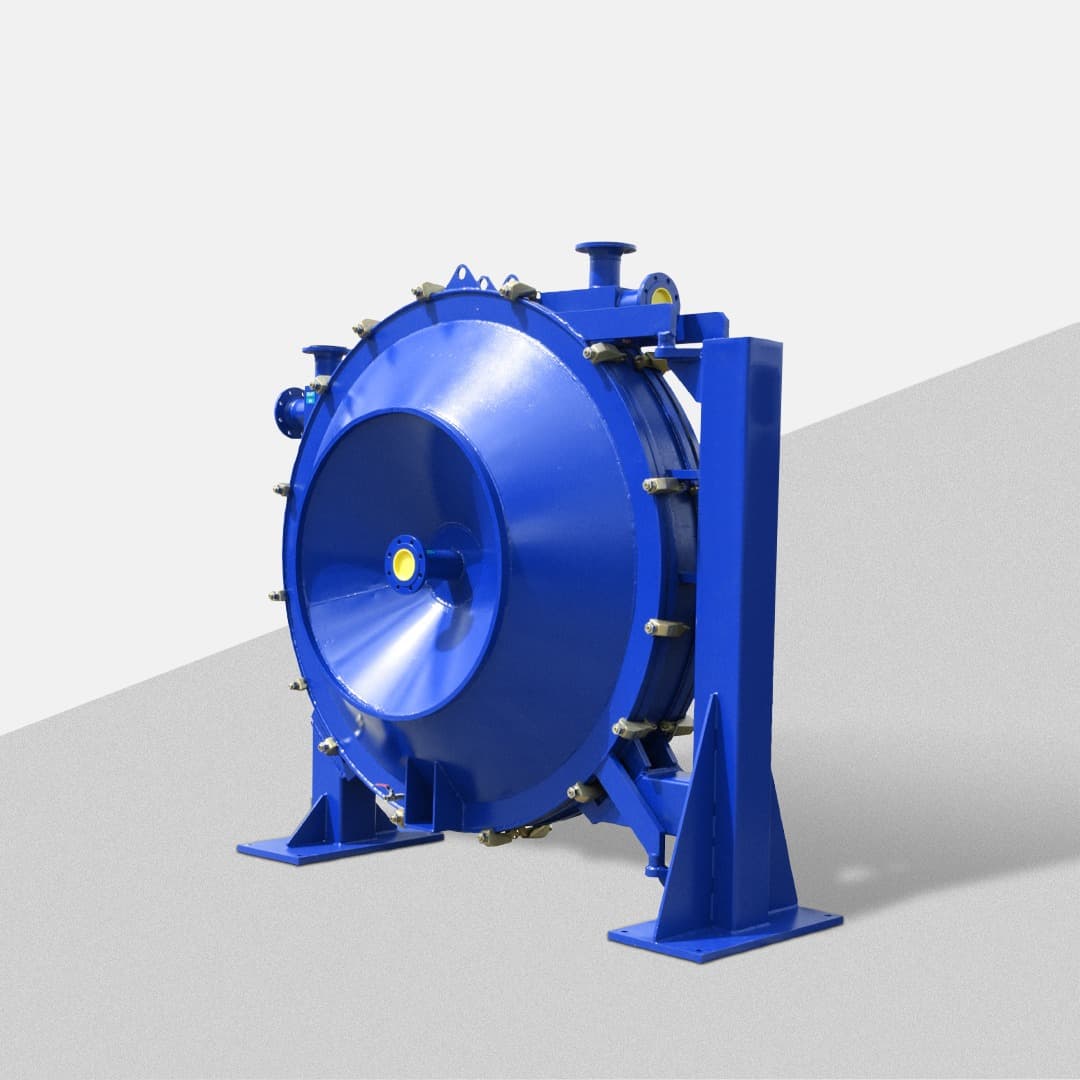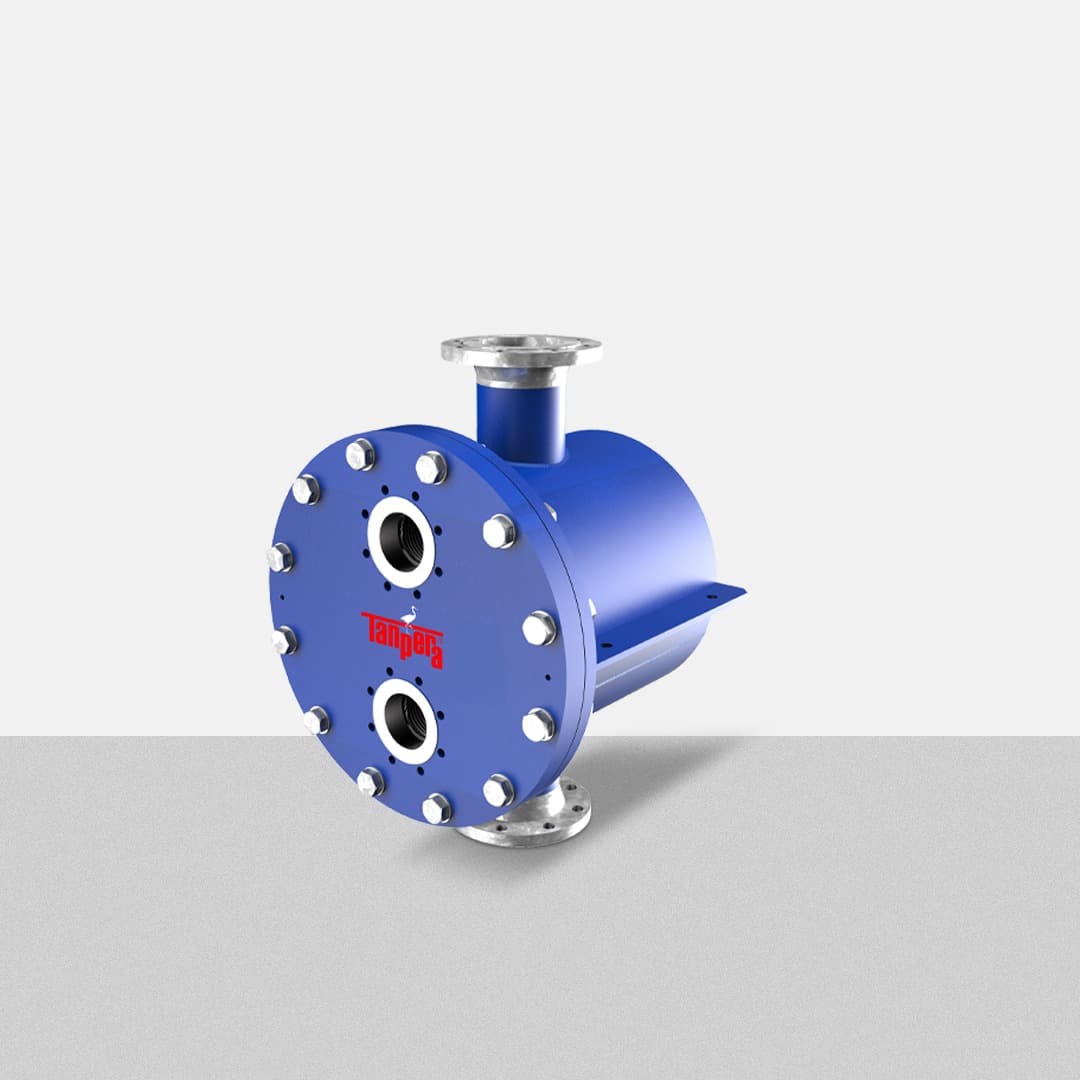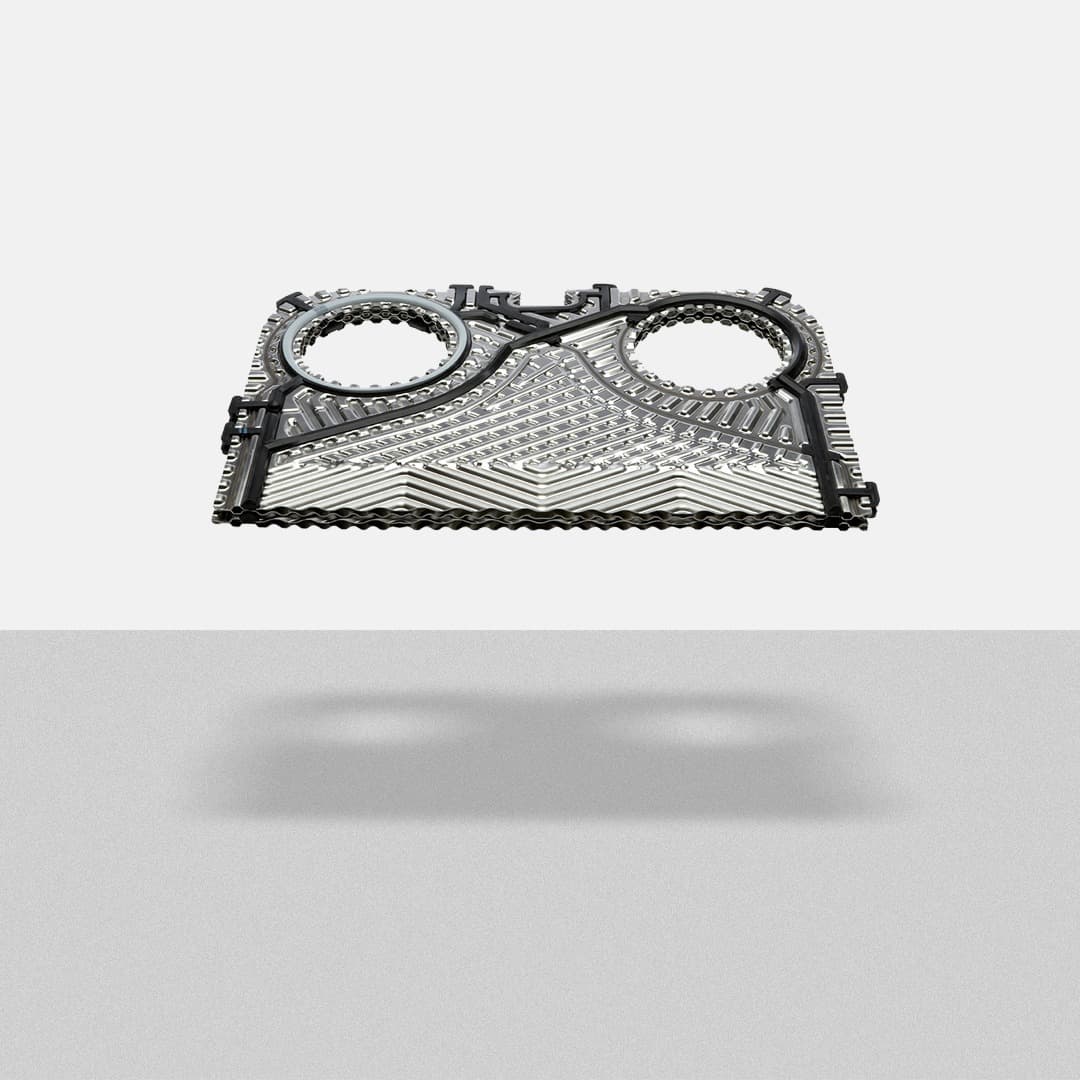


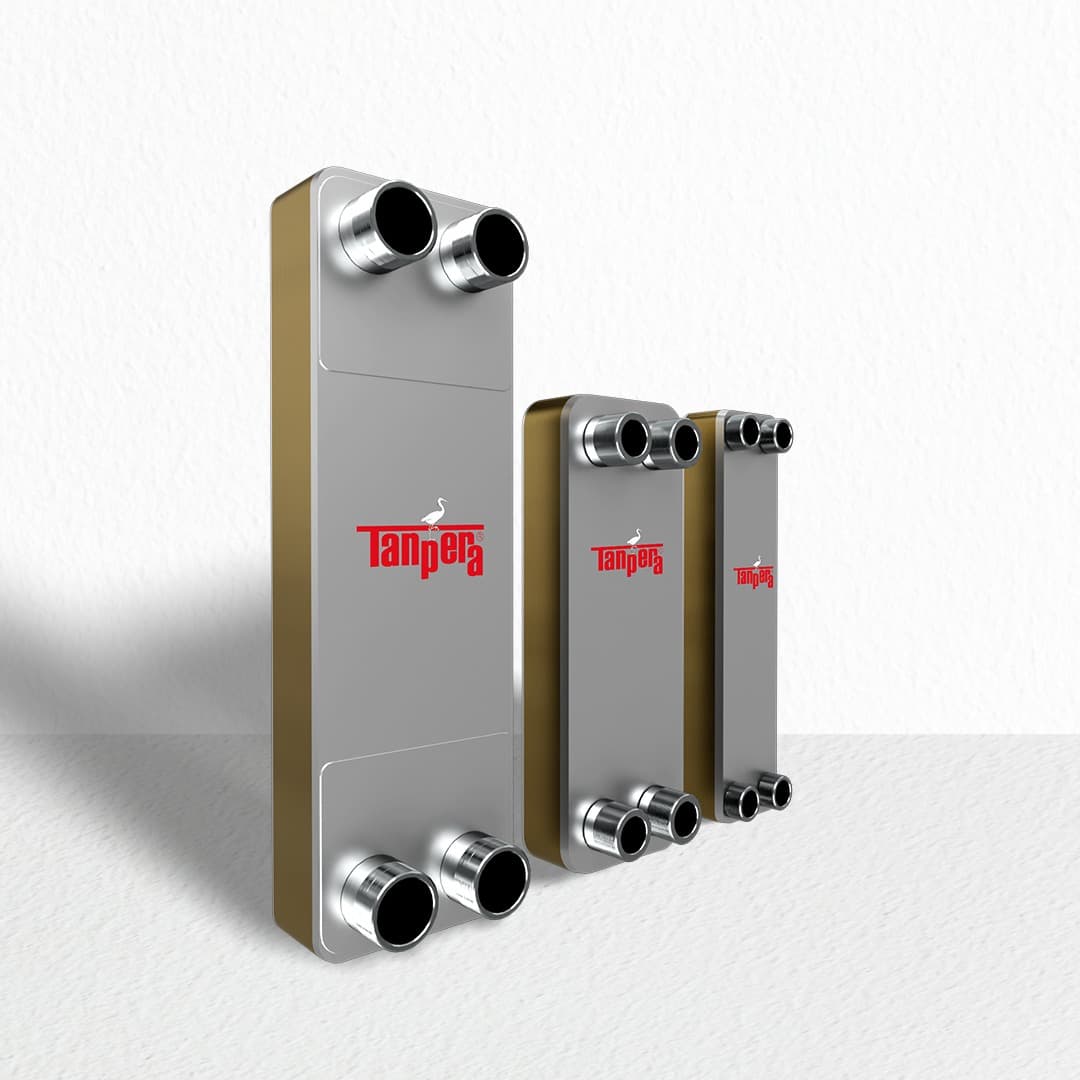
Steel Brazed Plate Heat Exchanger
Plate Heat Exchangers
Tanpera brazed plate heat exchangers stand out among modern heat transfer technologies as devices that offer high efficiency and compact design advantages.
About the Steel Brazed Plate Heat Exchanger
Tanpera brazed plate heat exchangers stand out among modern heat transfer technologies as devices that offer high efficiency and compact design advantages.
Brazed Plate Heat Exchanger Design
Performance and Reliability
High pressure resistance and geometry suitable for tight spaces are especially advantageous in indoor building installations and packaged unit applications. Tanpera brazed heat exchangers are offered with material and capacity options suited to project requirements.
Key Features
- High sealing performance with brazed plate joints and no gaskets.
- Compact geometry; suitable for secondary circuits, combi and domestic applications, and closed-circuit cooling.
- Efficient heat transfer in tight spaces with high pressure resistance.
Installation and Commissioning
During commissioning, pressure testing, flow adjustment, and temperature control must be performed. The Tanpera technical team provides field support and training.
After-Sales Services
System efficiency is preserved over the long term through periodic inspection and performance measurement.
Frequently Asked Questions
A Steel Brazed Plate Heat Exchanger is a compact, gasket-free heat exchanger in which stainless steel plates are permanently joined with copper or nickel braze. The two fluids exchange heat in counterflow within the plate channels; because sealing is provided by the brazed joint, maintenance demand is low. Especially preferred in secondary circuits, combi and domestic applications, and closed cooling lines.
Because no gasket is used, leakage risk is low, the body is very compact, and the installation footprint is minimal. High pressure resistance makes them safe for refrigerant circuits and high-pressure installations. As a drawback, plates cannot be disassembled, so cleaning is done by chemical flushing or reverse flow; capacity increase is more limited than with gasketed models.
Plates are AISI 316 stainless steel; the braze joint is copper- or nickel-based. Connection nipples may be stainless steel or brass. Material combination is verified at the project stage according to fluid chemistry and temperature range.
Common in combi and domestic secondary circuits, chiller condenser/evaporator side circuits, heat pump systems, solar installations, and small-to-medium HVAC projects. Dimensions that fit tight spaces are an advantage in indoor building installations.
Depending on model and braze type, operating pressure up to 30 bar and a wide temperature range can be supported. Refrigerant type in cooling circuits and maximum temperature and pressure in HVAC applications should be checked in the project design. Refer to the product technical data sheet for exact limits.
Flow rate, temperature difference, and allowable pressure drop are the primary inputs. Because brazed heat exchangers come with a fixed plate pack, correct model selection is critical. The Tanpera engineering team recommends a suitable model and connection size based on your application data.
Because there is no gasket, periodic gasket replacement is not required; filtration and water quality are important to prevent corrosion. On performance drop, reverse flow or approved cleaning solutions can be used. Because the brazed body cannot be opened, heavy fouling may require planning a new unit.
You can download the English brochure and user manual as PDF from the Documents tab on the product page. Up-to-date technical documents are published regularly in this area.
You can submit your project details via the Quote Form on the product page or contact our sales team at sales@tanpera.com. Our engineering team will get in touch for sizing and pricing based on your project data.