

Plate Heat Exchanger Maintenance & Cleaning Guide
Plate Heat Exchanger Maintenance & Cleaning Guide — Tanpera engineering guidance covering process requirements, design criteria and recommended equipment.
Key takeaways
- Plate Heat Exchanger Maintenance & Cleaning Guide — Tanpera engineering guidance covering process requirements, design criteria and recommended equipment.
- Plan cleaning when pressure drop exceeds 50% of the design value
- Intervene when a 10–15% drop in heat-transfer efficiency is detected
- Gasket condition and the compression bar should be checked at every service
- Regular maintenance supports gasketed plate heat exchangers reaching a 15–20 year service life
Why Is Regular Maintenance Required?
Scale, sediment, biological film or process residue (fouling) on plate surfaces increases heat-transfer resistance. Result: higher energy use for the same duty, rising pressure drop and earlier equipment wear.
- Plan cleaning when pressure drop exceeds 50% of the design value
- Intervene when a 10–15% drop in heat-transfer efficiency is detected
- Gasket condition and the compression bar should be checked at every service
- Regular maintenance supports gasketed plate heat exchangers reaching a 15–20 year service life
CIP — Cleaning in Place
Circulating cleaning chemical through the channels without dismantling the heat exchanger:
- Fast application — minimal system downtime
- Low gasket-damage risk (with the correct chemical selection)
- Acidic solutions for scale and mineral deposits
- Alkaline or enzymatic cleaners for organic fouling
- Used as the only cleaning method on brazed exchangers
Mechanical (Manual) Cleaning
Cleaning gasketed plate heat exchangers by opening the plate pack:
- Preferred for heavy fouling and stubborn deposits
- Plates must be numbered and packing orientation marked
- Use a soft brush or low-pressure water — never a metal brush
- Inspect gasket and plate surfaces for damage
- Follow the manufacturer A-dimension and tightening-torque values during reassembly
Recommended Maintenance Intervals
Maintenance intervals vary with fluid quality and application type.
| Application | Observation | Detailed maintenance |
|---|---|---|
| Clean water / HVAC | Performance check every 6–12 months | CIP or general inspection every 1–3 years |
| Food process (CIP lines) | Pressure drop after each CIP cycle | Gasket and plate check every 6–12 months |
| Hard / scaling water | Pressure-drop monitoring every 3–6 months | Acidic CIP every 6–12 months |
| Chemical / aggressive process | Monthly leak and gasket check | Project-based — review every 3–6 months |
| Brazed (BPHE) | Pressure-drop and efficiency tracking | Annual CIP or when performance drops |
On gasketed plate heat exchangers, the gasket set should be renewed after each opening or per manufacturer guidance. Tanpera spare plates, gaskets and service support are provided under after-sales services.
Periodic Inspection Checklist
During planned maintenance visits, verify the following items:
- Inlet–outlet temperatures and flow-rate values (compare with design data)
- Pressure-drop measurement — impact on pump energy consumption
- Gasket surface, compression bar and frame condition
- Connection flanges, filters and expansion-tank integration
- Leak check — between plates or at connection points
- Corrosion and plate-surface integrity (titanium / 316 alloy check)
Related Tanpera Products
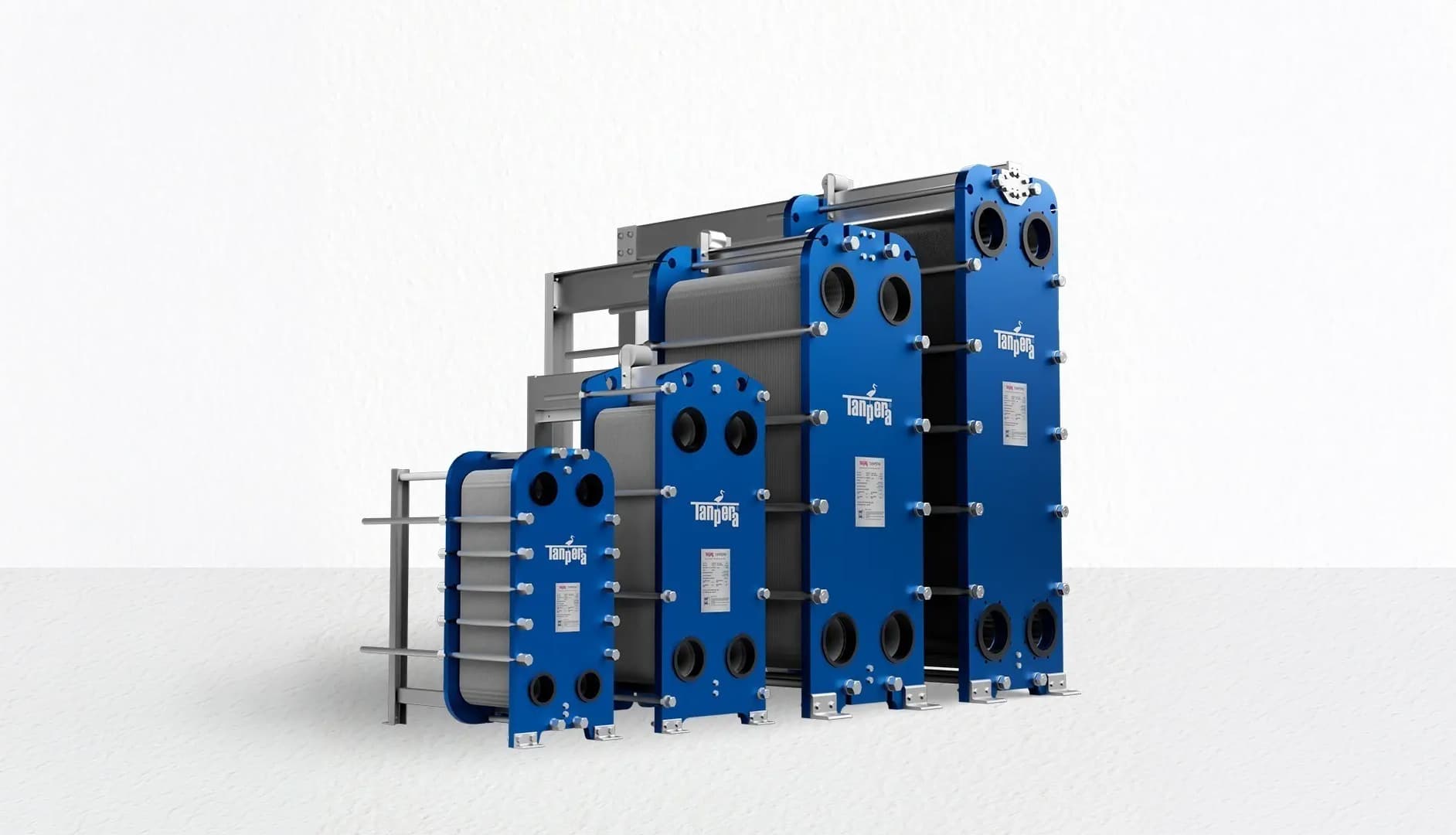
Gasketed Plate Heat Exchanger
Removable plate pack for mechanical cleaning and capacity flexibility. HVAC and process duties that need periodic maintenance.
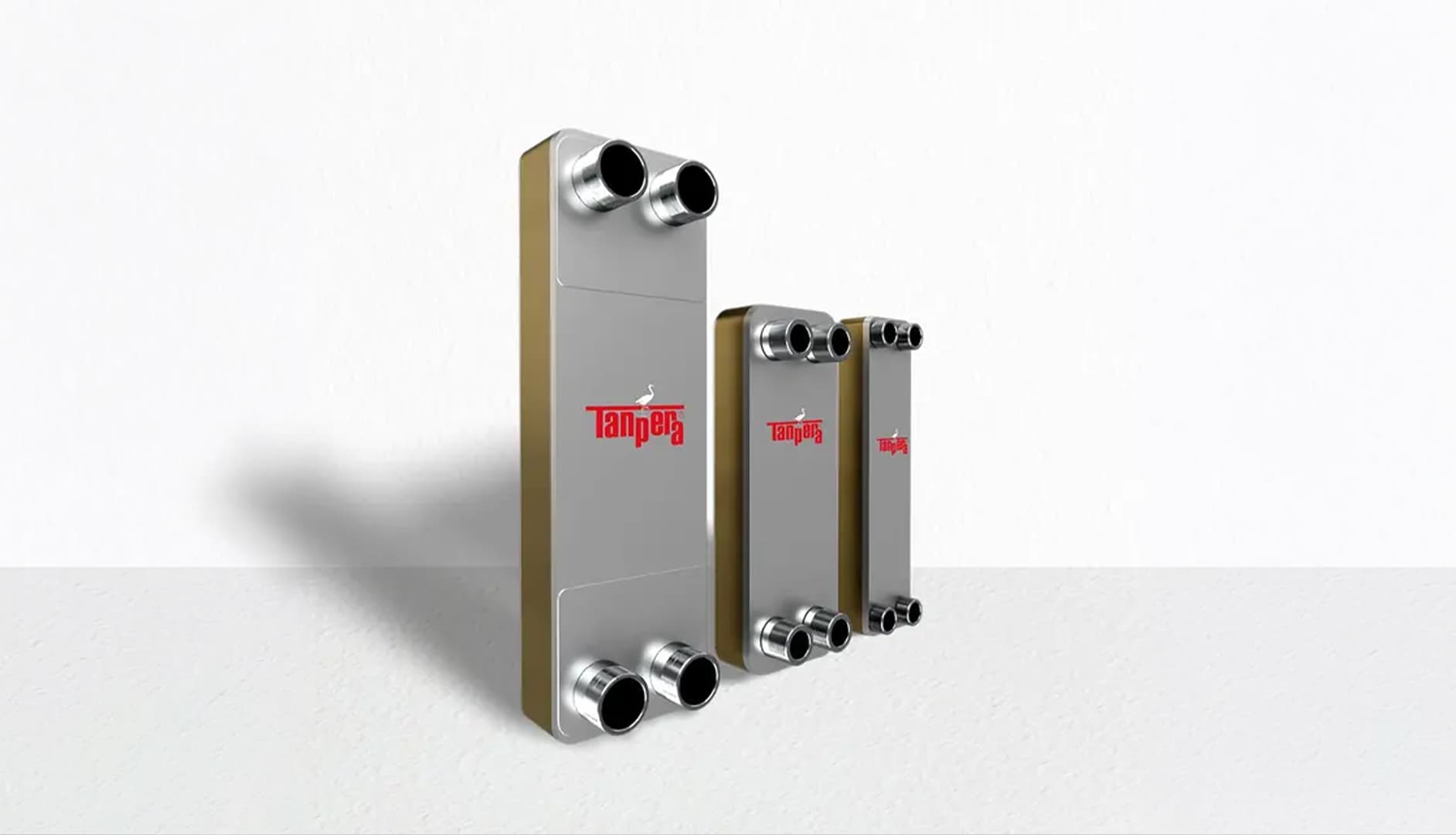
Steel Brazed Plate Heat Exchanger
Compact construction with no gasket maintenance. CIP-only service on clean circuits; plate pack cannot be opened.
Tanpera After-Sales Support
- Spare plate-pack and gasket-set supply
- Field maintenance and plate-cleaning service
- Performance measurement and efficiency report
- Periodic maintenance-contract options
Related Guides
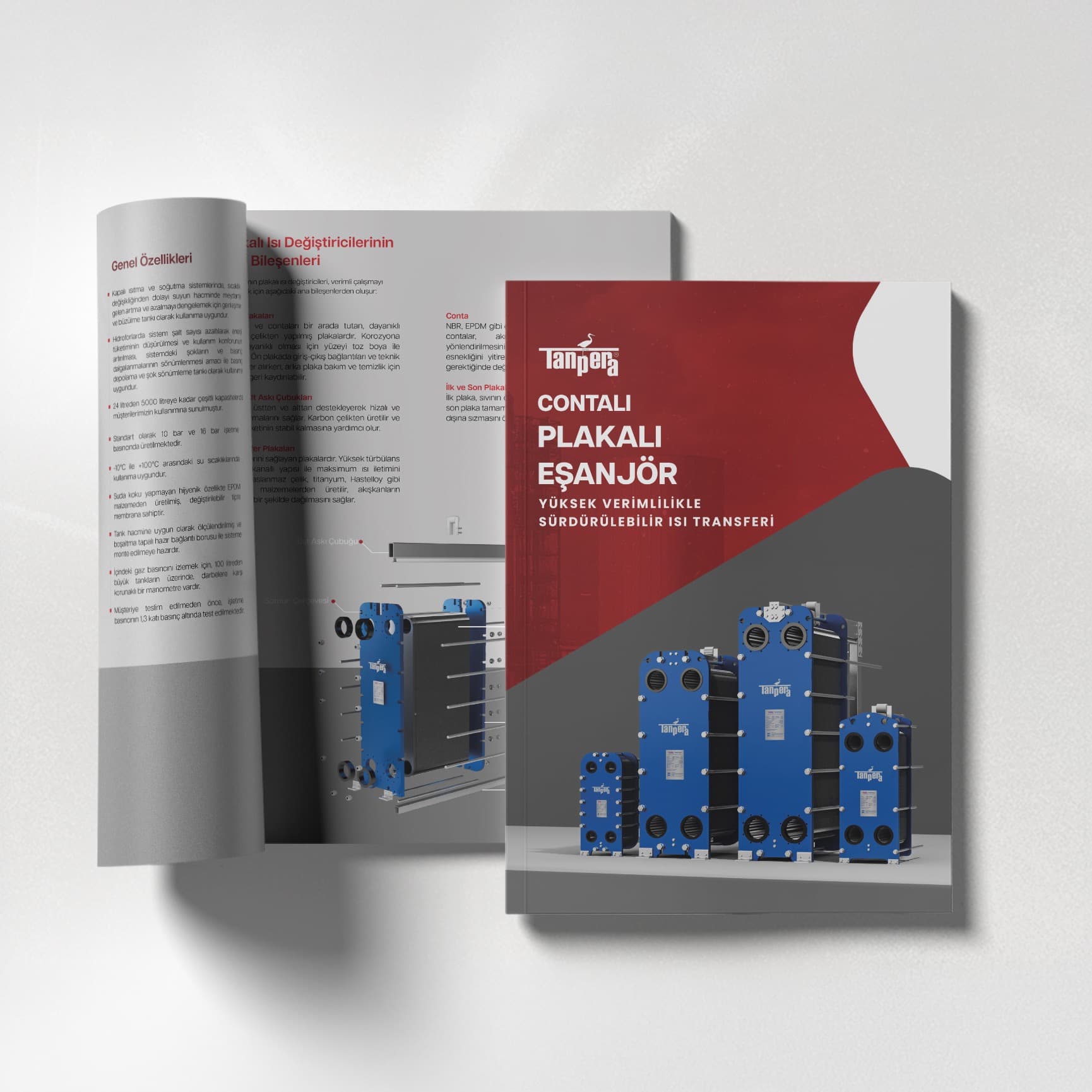
Explore the detailed brochure
Find Tanpera product groups, technical advantages and application recommendations in the brochure.
- Product groups
- Technical advantages
- Application recommendations
References & standards
- ISO 9001:2015 — Quality management systems — Quality reference for production and project processes
Frequently Asked Questions
How often should a plate heat exchanger be cleaned?
On clean-water and HVAC applications, an assessment every 1–3 years may be enough. On hard water, food process or fouled fluids, inspection every 6–12 months is recommended. Cleaning should be planned when pressure drop or efficiency falls past threshold values.
What is the difference between CIP cleaning and mechanical cleaning?
CIP (Cleaning-In-Place) circulates a chemical solution through the channels without dismantling the heat exchanger; it is fast and gasket-friendly. Mechanical cleaning means removing and brushing or washing the plates on gasketed models and is required for heavy fouling. Brazed exchangers can only use CIP.
When should gaskets be replaced?
Renewing the gasket set is recommended at every plate-pack disassembly. Immediate replacement is required for leaks, cracked or hardened gasket surfaces, or dripping that continues after retorquing. Gasket material must be selected for fluid temperature and chemistry.
What should be considered when cleaning plates?
Avoid metal brushes and abrasive chemicals; do not damage the chevron pattern on the plate surface. Number the plates and mark assembly orientation. Rinse thoroughly with clean water after cleaning and follow the manufacturer tightening-torque values.
How can Tanpera maintenance service be requested?
Submit a maintenance request via info@tanpera.com.tr or the after-sales services page. The Tanpera service team provides site visits, plate cleaning, gasket replacement and performance testing.